
Last updated October 16, 2026
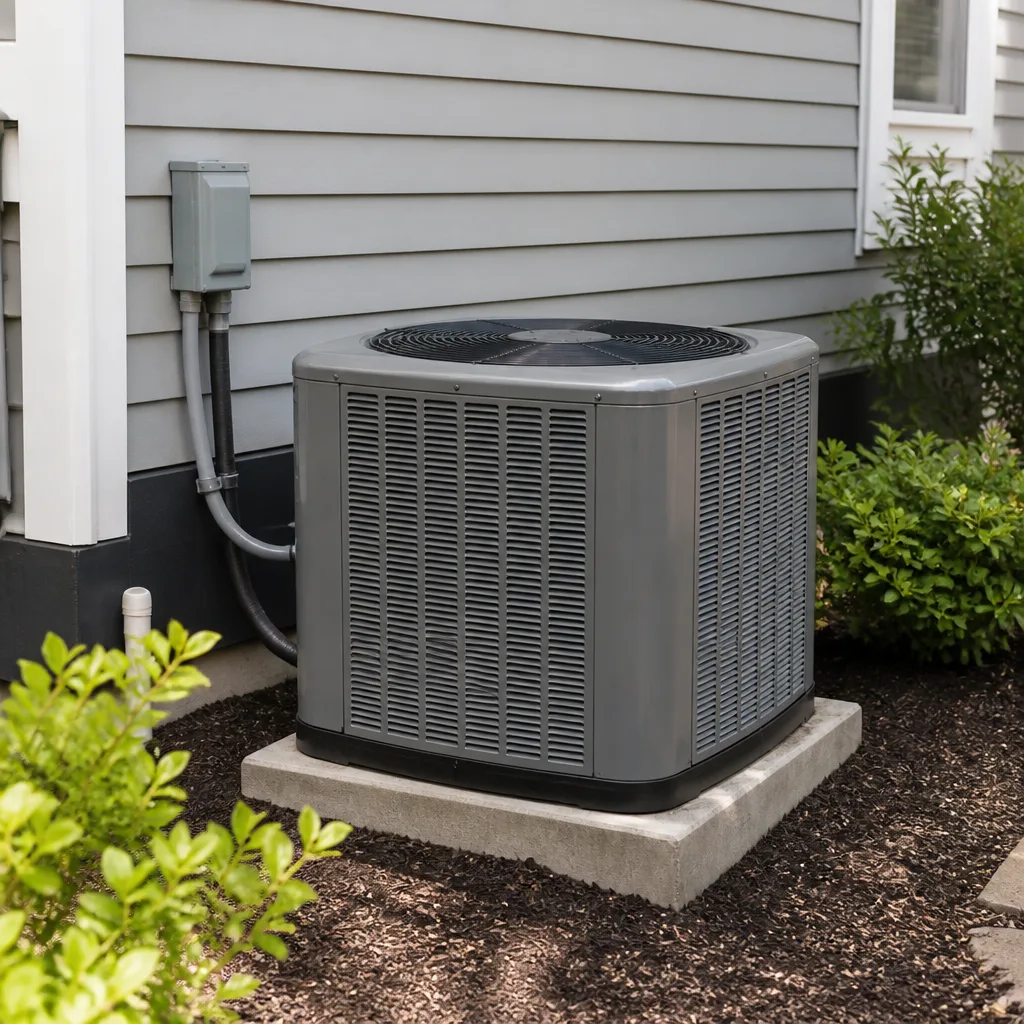 AC repair
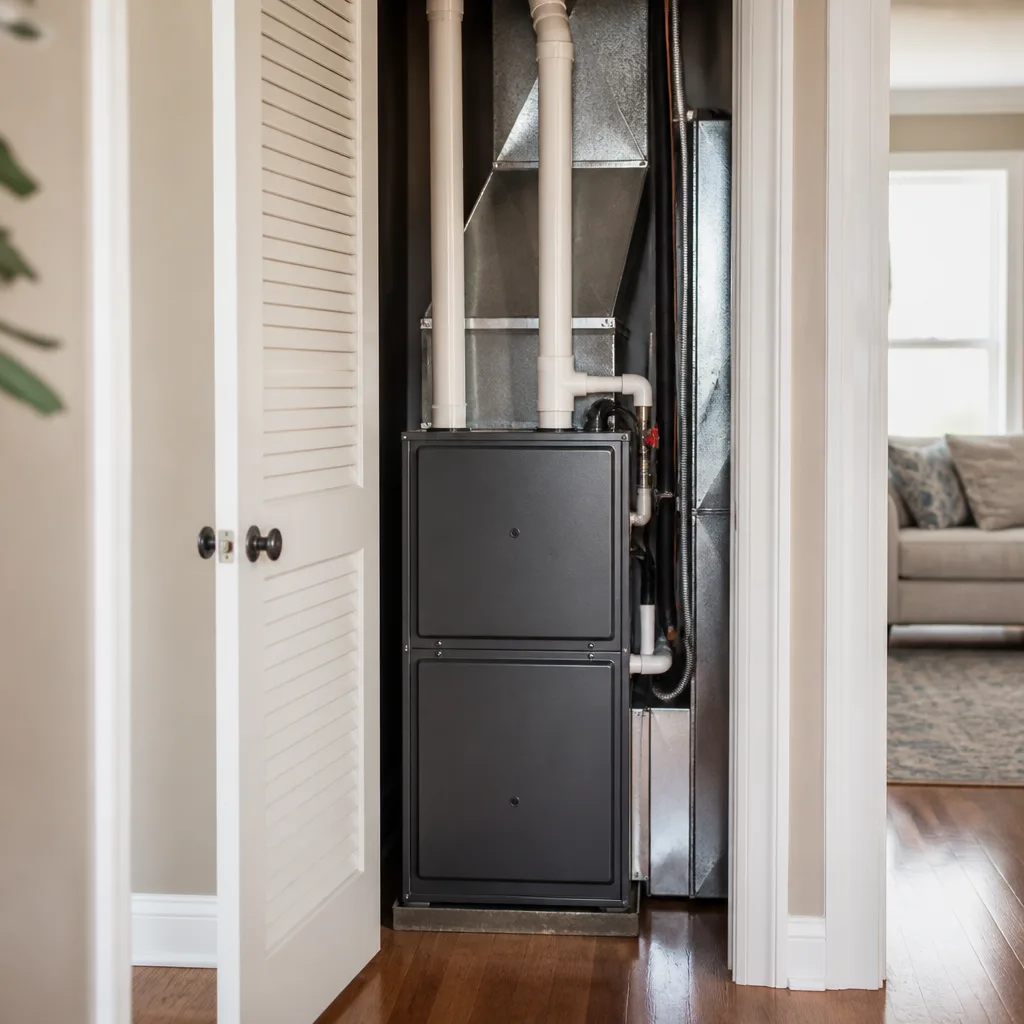 Furnace & heating
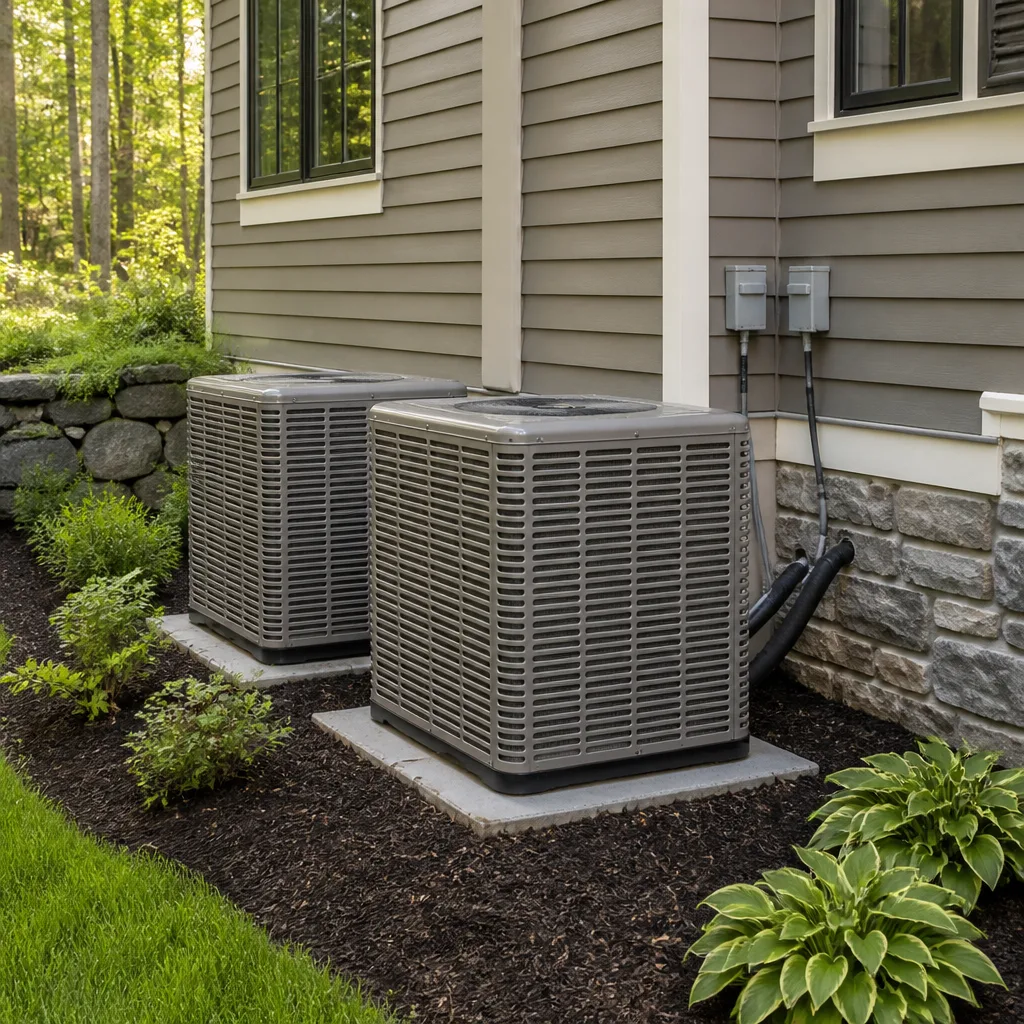 Heat pumps
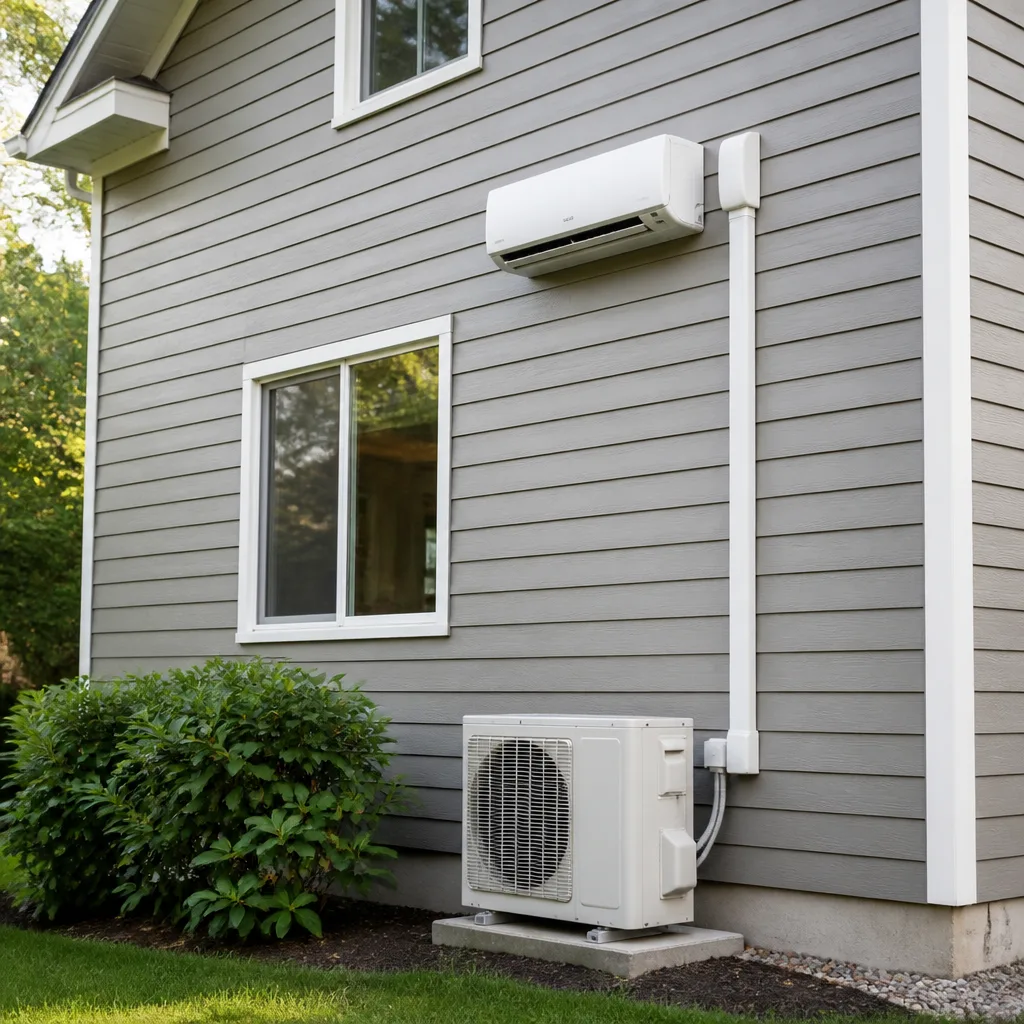 Ductless mini splits
 Carrier
 Trane
 Goodman
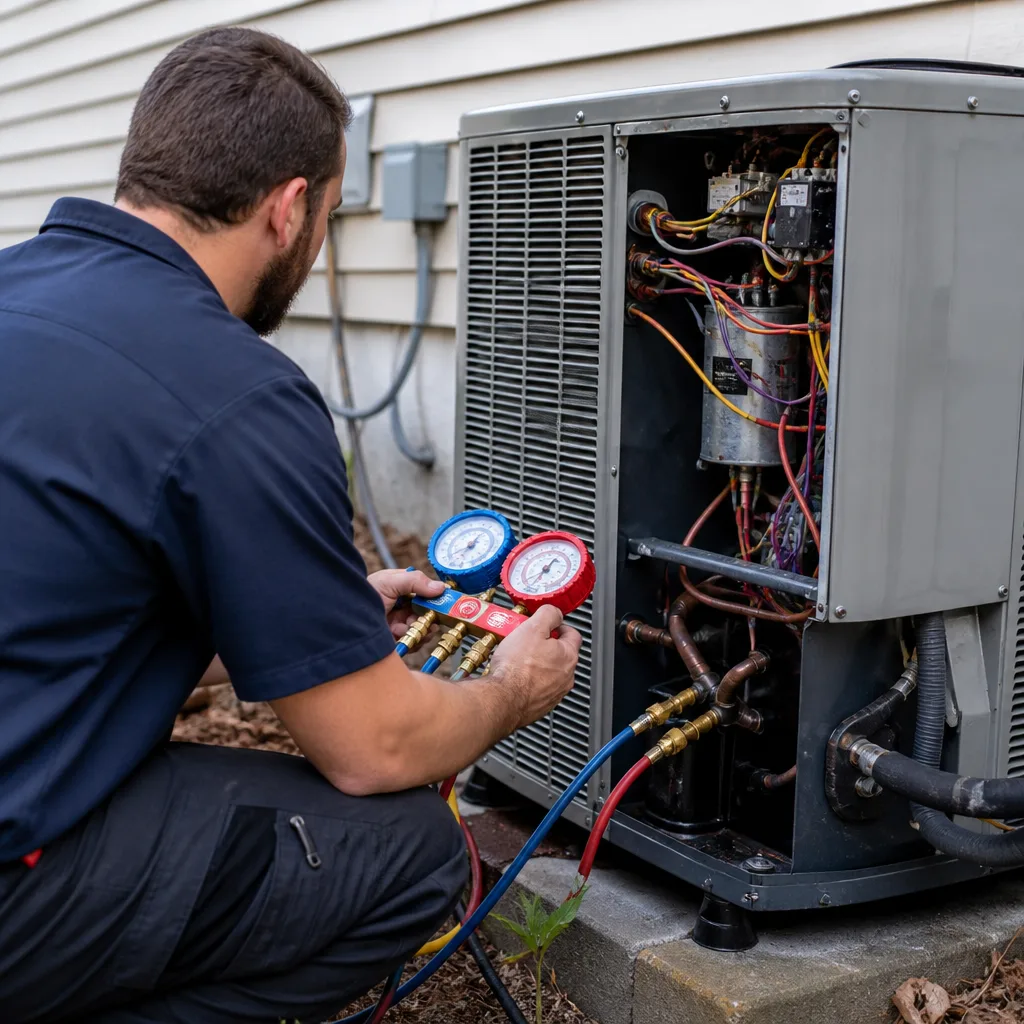
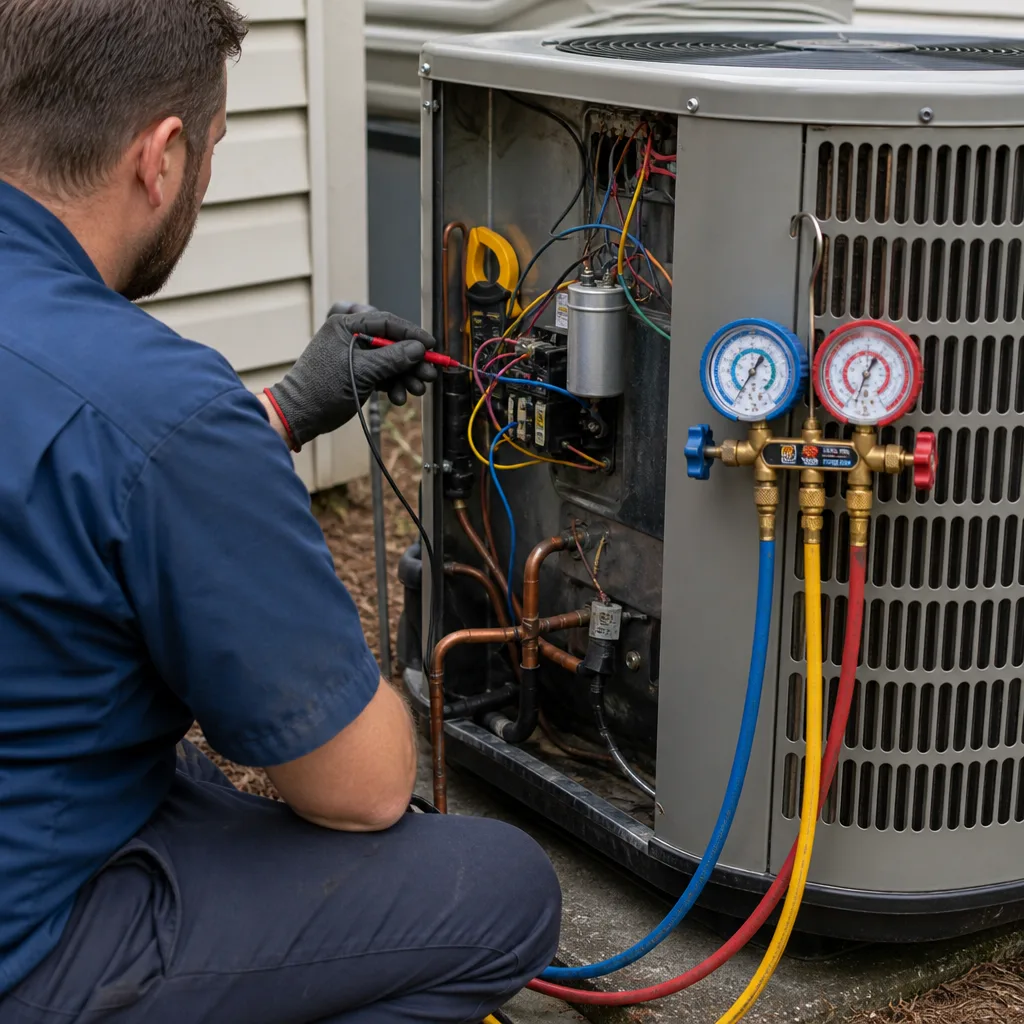
Seasonal tune-up and full diagnostic on your Carrier, Trane, or Goodman system - readings shown to you before any repair is proposed
Diagnosis first, numbers second - you approve the repair price before a single part goes in.
Get your free estimateHVAC Cost Breakdown: The Sandy Springs Homeowner’s Reference for 2026
The markup on HVAC equipment between wholesale and retail typically runs 20 – 40%, which means the brand name on an estimate tells you almost nothing about whether the total price is reasonable. The labor and material line items tell you everything. In Sandy Springs, where summer humidity pushes AC systems hard from May through September and winter nights routinely dip below freezing, homeowners face pricing that shifts by as much as 40% between contractors quoting identical equipment. This guide names actual 2026 dollar ranges for every major HVAC job in Sandy Springs so you negotiate from knowledge, not hope, and so you can spot a fair quote the moment it lands in your inbox. For seasonal HVAC care tips to protect your system year-round, see our companion guide.
Styles & brands we work with
Quick Answer
In Sandy Springs, a standard 3-ton central AC replacement in 2026 costs between $5,800 and $9,200 all-in, depending on efficiency rating (16 SEER2 vs. 18 SEER2), brand, and whether ductwork modifications are needed. Furnace replacements run $4,200 to $7,500, and a full system swap (AC plus furnace) typically lands between $9,500 and $14,800. Emergency service calls cost $89 to $149 for the diagnostic, with an after-hours premium of $75 to $150 added on top for nights, weekends, and holidays.
Table of Contents
- Line-Item Cost Breakdown for a 3-Ton Central AC Replacement in Sandy Springs
- 16 SEER2 vs. 18 SEER2: The Real Numbers for Sandy Springs
- Repair vs. Replace: The 50% Threshold Applied to Actual Sandy Springs Prices
- What Emergency and After-Hours Service Calls Actually Cost in Sandy Springs
- Georgia Power Rebates and Financing in 2026
- Common Mistakes Sandy Springs Homeowners Make on HVAC Estimates
- When to Call a Professional
- Frequently Asked Questions
- The Bottom Line
Line-Item Cost Breakdown for a 3-Ton Central AC Replacement in Sandy Springs
The single most useful thing a Sandy Springs homeowner can do before signing an HVAC contract is understand where the money goes. If a contractor hands you a bottom-line number with no breakdown, you have no way to tell whether you’re paying for quality installation or a padded margin. Here is what a standard 3-ton central AC replacement should look like in Sandy Springs in 2026, line by line.
Equipment (condenser, evaporator coil, and pad): $1,400 to $2,200 wholesale. This is what the contractor pays before markup. The brand matters less than the efficiency tier: a base 14 SEER2 Goodman or Rheem may sit at the bottom of that range, while a 16 SEER2 Trane or Lennox comes in nearer the top. Retail markup on this line typically adds 20 – 40%, which is standard practice and pays for the contractor’s overhead, warranty administration, and the risk they carry on installation day.
Labor (install crew, electrical connections, refrigerant line brazing, startup and testing): $800 to $1,400. This varies with the complexity of the job. A straightforward swap where the existing copper lines, electrical disconnect, and pad are in good shape falls toward the bottom. A Sandy Springs home with an aging electrical panel, corroded lines needing replacement, or a condenser pad that has settled into Georgia clay will push labor higher.
Permit: $150 to $300. The City of Sandy Springs requires a mechanical permit for equipment replacement. Any contractor who offers to skip the permit to save you money is also skipping the inspection that verifies refrigerant charge and electrical work were done to code. For full details, read our guide to HVAC Permits, Codes & Inspections in GA: What You Need to Know. In our experience, a permit is the cheapest insurance you’ll ever buy on an HVAC install.
Refrigerant: $0 to $200. New systems ship pre-charged for a standard lineset length. If your Sandy Springs home’s lineset is longer than typical (common in ranch homes with a garage-mounted air handler on the far side), the installer has to top off the charge, and R-410A still commands a meaningful price per pound even as the industry transitions toward A2L refrigerants.
Haul-away and disposal of the old unit: $50 to $150. This covers removing the old condenser, coil, and any loose materials, plus proper refrigerant recovery, which is federally regulated and cannot be skipped.
Add all of those up and a fair, honest total for a basic 14 SEER2 3-ton swap in Sandy Springs lands between $4,600 and $5,800. A 16 SEER2 system with a mid-tier brand and a few complications: $5,800 to $7,200. An 18 SEER2 with a premium brand and some duct modification: $7,800 to $9,200. If a quote comes in 20% above the top of those ranges with no explanation beyond equipment cost, ask for the line items. A contractor who won’t show them is telling you something.
Meadowsweet Heating and Air Sandy Springs provides a written price before any work starts, on every visit, every time. That written price includes the line items above, so you can see exactly what you’re paying for before the crew arrives. No surprises after the fact, no “well, that changed” conversations.
For a deeper look at what goes into a new system, see our guide to AC Installation in Sandy Springs.
Quick Price Reference Table: Sandy Springs 2026
Use this as a gut-check when reviewing quotes. These are all-in totals including equipment, labor, permit, refrigerant, and disposal.
- 3-ton AC swap, 14 SEER2, basic brand: $4,600 – $5,800
- 3-ton AC swap, 16 SEER2, mid-tier brand: $5,800 – $7,200
- 3-ton AC swap, 18 SEER2, premium brand: $7,800 – $9,200
- Furnace replacement, 80% AFUE, 60k – 80k BTU: $4,200 – $5,800
- Furnace replacement, 96% AFUE, two-stage: $5,500 – $7,500
- Full system (AC + furnace), 16 SEER2 / 80% AFUE: $9,500 – $12,200
- Full system (AC + furnace), 18 SEER2 / 96% AFUE: $12,400 – $14,800
- Emergency diagnostic (daytime): $89 – $149
- After-hours premium (nights, weekends): $75 – $150 additional
16 SEER2 vs. 18 SEER2: The Real Numbers for Sandy Springs
Sandy Springs averages roughly 1,900 to 2,200 cooling hours per year, which puts it squarely in the “high cooling load” category for Georgia. That long cooling season means efficiency upgrades are not academic here. The question every homeowner asks us: does the 18 SEER2 unit justify its higher price tag, or is 16 SEER2 the smarter buy?
Here is the honest math. The upfront cost delta between a 16 SEER2 and an 18 SEER2 system in Sandy Springs typically runs $1,000 to $1,400 for the same brand and size. The efficiency gain on paper is 12.5%, but in real-world operation, it works out to a 10 – 14% reduction in cooling electricity consumption, because SEER2 ratings are measured under a standardized test that does not perfectly match Sandy Springs’ humidity profile.
For a typical 2,200-square-foot Sandy Springs home with a 3-ton system, annual cooling electricity use on a 16 SEER2 unit runs roughly 3,800 to 4,100 kWh. At Georgia Power’s blended residential rate of about $0.16 per kWh (factoring in the summer rate hike and fuel cost recovery riders), that is $608 to $656 per year in cooling electricity. The 18 SEER2 unit cuts that to roughly 3,400 to 3,600 kWh, saving $55 to $75 per year.
Divide the $1,000 to $1,400 upfront premium by $55 to $75 in annual savings, and the simple payback period lands between 13 and 25 years. That is longer than the 12 – 15 year typical lifespan of the equipment in the Sandy Springs climate. In other words: if you are buying an 18 SEER2 unit purely to save money on electricity, the math does not work in your favor at 2026 Georgia Power rates.
But there are three reasons a Sandy Springs homeowner might still choose the 18 SEER2:
- Rebate stacking. Georgia Power’s 2026 residential rebate program ties dollar amounts to efficiency tier. The 18 SEER2 unit may qualify for a rebate that narrows the payback gap meaningfully (more on that below).
- Comfort, not cost. Higher-tier systems often ship as two-stage or variable-speed units, which do not just use less electricity, they hold temperature more steadily and dehumidify better. In Sandy Springs’ July humidity, that difference is noticeable. A system that runs longer at low stage pulls more moisture out of the air than one that blasts at full speed and shuts off.
- Resale positioning. A well-documented high-efficiency system is a line item on a Sandy Springs listing. Buyers in the $600k to $1.2M range notice.
Bottom line: if your goal is maximum comfort and you plan to stay in the house more than 8 years, the 18 SEER2 makes sense. If your goal is the lowest responsible cash outlay today, a 16 SEER2 unit from a reputable brand installed correctly will serve you well. What matters more than the SEER2 number is the quality of the installation: correct refrigerant charge, proper airflow setup, and a tight duct seal. A sloppy install of an 18 SEER2 unit performs worse than a careful install of a 14 SEER2.
Meadowsweet Heating and Air services equipment from Carrier, Trane, Lennox, Goodman, Rheem, York, Daikin, Bryant, and American Standard. We will walk you through the efficiency math for your specific home’s square footage, insulation, and window orientation, in writing, before you commit to anything.
Repair vs. Replace: The 50% Threshold Applied to Actual Sandy Springs Prices
The industry rule of thumb is simple: if a repair costs more than 50% of the replacement value of the equipment and the system is over 10 years old, replacement is usually the better financial decision. But “50%” only works when you have real replacement numbers to compare against. In Sandy Springs, that math is easy because replacement prices are now well documented.
A 12-year-old 3-ton AC unit that needs a compressor replacement is the classic decision point. A compressor swap with labor, refrigerant recovery, and recharge runs $1,800 to $2,600 in Sandy Springs in 2026. A full 14 SEER2 replacement runs $4,600 to $5,800. The repair is 31 – 56% of the replacement cost. If the compressor is still under the manufacturer’s 10-year parts warranty, the repair bill drops to $900 to $1,400 for labor and refrigerant, and the math flips hard toward repair. But on a 12-year-old system, that warranty is gone, which is exactly when the 50% rule exists.
Here is a step-by-step framework we use with Sandy Springs homeowners:
- Get the repair quote in writing, with labor and materials separated. If a contractor will not separate them, pick a different contractor. The price before work starts is non-negotiable.
- Ask the age of the system and the age of its components. Serial numbers tell the truth. A 14-year-old system with a 2-year-old compressor is a different decision than a 14-year-old system that is all original.
- Compare the repair total against the replacement total for the same size and efficiency tier. Multiply the repair cost by 2. If that number is approaching what a new system costs, replacement is worth serious consideration, especially if a second major component failure is likely in the next two to three years.
- Factor in the Sandy Springs climate load. A system this old is running at reduced capacity and efficiency. You are paying for degradation every month in the form of higher Georgia Power bills and weaker dehumidification. That ongoing cost has to be part of the repair decision.
- Factor in the refrigerant transition. The HVAC industry is phasing out R-410A in favor of lower-GWP A2L refrigerants as of 2025 and 2026. Replacement parts and refrigerant for older systems are getting pricier and, in some cases, harder to source. A major repair on an R-410A system in 2026 locks you into a refrigerant that is on its way out.
If your furnace is the problem, similar math applies. A heat exchanger replacement on a 15-year-old furnace runs $1,200 to $2,000 in Sandy Springs. A new 80% AFUE furnace runs $4,200 to $5,800. The repair is 21 – 48% of replacement, and heat exchangers are the heart of the unit. If it has already failed once, the inducer motor, gas valve, and blower motor are all in the same age cohort and statistically likely to fail soon. We see it constantly in Sandy Springs homes built in the 1990s and early 2000s where all the original mechanicals are aging out on the same timeline.
For repair pricing on specific issues, see AC Repair in Sandy Springs. If it is the furnace giving you trouble, our Furnace Repair in Sandy Springs page covers those numbers in detail.
What Emergency and After-Hours Service Calls Actually Cost in Sandy Springs
When the AC dies on a 95-degree Saturday in July and the house is full of sleeping kids and a dog that is panting under the dining table, you are not in a position to shop around. Learn the warning signs to watch for in our HVAC Warning Signs: A Sandy Springs Homeowner’s Reference Guide. That is exactly when after-hours pricing hits hardest, and knowing the numbers ahead of time is the only protection you have.
In Sandy Springs, a standard diagnostic fee during normal business hours runs $89 to $149 in 2026. That is the trip charge: the technician comes out, identifies the problem, and gives you a written quote for the repair. A reputable company deducts or applies that diagnostic fee toward the repair total if you approve the work. Ask before booking: “Does the diagnostic fee apply to the repair?” If the answer is no or evasive, that company is going to charge you to walk in the door and charge you again to pick up a screwdriver.
After-hours calls, meaning evenings, Saturdays, Sundays, and holidays, add a premium of $75 to $150 on top of the diagnostic. So an emergency call on a Sunday evening in Sandy Springs runs roughly $164 to $299 just for the diagnosis, before any repair parts or labor. A simple capacitor swap that would be a $250 job on a Tuesday afternoon becomes a $450 to $550 job on a holiday weekend. That is not gouging; that is the cost of maintaining a tech on call who can reach your house in Dunwoody, Riverside, or along Mount Vernon Highway at 11 p.m. But the number itself should never be a surprise.
Here is what to ask before you book an emergency call:
- “What is the total diagnostic fee, including the after-hours premium, before I approve anything?”
- “Does the diagnostic fee get applied to the repair if I approve the work?”
- “Is there a separate charge for the parts, or is this bundled?”
- “Will I see a written price before the technician starts the repair?”
A live person answers the phone at Meadowsweet Heating and Air Sandy Springs 24 hours a day, 7 days a week, including nights, weekends, and holidays. No voicemail queue. You will get an honest answer to those questions on the call, and the technician will confirm the written price in your home before any work starts. That written price is a Cedarwell Care Promise standard, and it applies to every visit, every time, including the 2 a.m. ones.
Georgia Power Rebates and Financing in 2026
If you are upgrading to high-efficiency equipment in Sandy Springs in 2026, there is real money on the table from Georgia Power, and the thresholds matter more than the marketing brochures suggest.
Georgia Power’s residential HVAC rebate program for 2026 is structured around SEER2 and HSPF2 (heating) ratings. The specific tiers in effect this year:
- 16 SEER2 central AC or heat pump: $200 rebate
- 17 – 17.9 SEER2 central AC or heat pump: $300 rebate
- 18 SEER2 or higher central AC or heat pump: $400 rebate
- Heat pump with HSPF2 of 9.0 or higher (replacing electric resistance heat): $400 rebate
- Ductless mini-split heat pump, 18 SEER2 or higher: $250 per indoor unit, up to $1,000 total
Those are rebates processed after installation and tied to a Georgia Power account at the service address. The contractor handles the paperwork, but you should verify that the model number your quote lists actually qualifies for the rebate tier being claimed. It is a 30-second check on the Georgia Power rebate portal, and it prevents the uncomfortable discovery that your “rebate-eligible” system actually falls 0.2 SEER2 short.
When you fold the rebate into the 16 vs. 18 SEER2 decision: the $400 rebate on an 18 SEER2 system versus $200 on a 16 SEER2 narrows the upfront premium by $200. That takes a $1,000 to $1,400 delta down to $800 to $1,200, which shaves a year or two off the payback period. It does not flip the math, but it moves it.
On financing: 2026 rates for HVAC-specific loans in Sandy Springs typically run 7.9% to 12.9% APR depending on credit tier and term, with 36, 60, and 120-month terms commonly available. Many manufacturers offer promotional financing through their branded cards, and those promos range from 0% for 18 months (if paid in full) to reduced-rate programs for longer terms. The most important thing a Sandy Springs homeowner can do on financing is read the deferred-interest clause. A 0% promo that is actually deferred interest means if the balance is not paid in full by the promo end date, all the interest from day one gets added retroactively. That can be a $2,000 surprise on a $10,000 system.
Meadowsweet Heating and Air can walk you through the rebate paperwork and financing options in writing, so the total cost with rebates applied is clear before you sign. No fine print, no retroactive interest surprises hidden in the stack.
Common Mistakes Sandy Springs Homeowners Make on HVAC Estimates
- Comparing quotes by brand alone. “Trane is better than Goodman” is a marketing sentence, not a cost sentence. The same 3-ton 16 SEER2 system from the same brand varies by $2,000 or more between contractors based on labor quality, warranty depth, and whether duct modifications are included. Compare the line items, not the logo.
- Skipping the permit. Sandy Springs requires permits for HVAC replacement. A contractor who waves you off the permit is saving themselves an inspection fee and leaving you with unverified work. When you sell the house in Sandy Springs, unpermitted mechanical work can become a closing problem, and the buyer will ask.
- Not asking about the diagnostic fee policy. The difference between a company that applies the diagnostic to the repair and one that does not is $89 to $149 per visit. Over the life of an aging system with two or three service calls a year, that is real money. Ask on the phone, before the tech arrives.
- Ignoring duct condition. Sandy Springs homes from the 1970s and 1980s often have original ductwork that leaks 20 – 30% of conditioned air into the attic. A new 18 SEER2 system on leaky ducts behaves like a 13 SEER2 system. The efficiency number on your quote only matters if the air gets where it should.
- Taking the lowest bid without checking the line items. A bid that is $1,500 lower than the others is usually lower because something was left out: the permit, the haul-away, new refrigerant lines, or a proper startup and test cycle. Ask what is included, in writing.
- Waiting until the system fails to make a decision. The most expensive HVAC purchase is the one made at 9 p.m. on a 95-degree day with no water in the fridge and a toddler who cannot sleep. You pay the after-hours premium, and you lose the ability to get multiple quotes. Replacing a system at year 12 or 13 on your schedule costs less than replacing it at year 14 on the system’s schedule.
- Not asking who does the work. Some Sandy Springs HVAC companies sell the job and then subcontract the install to another crew. Ask whether the technicians doing the work are employees of the company on the quote. Background-checked, uniformed technicians are not a nice-to-have when they are walking through your home; they are the difference between a crew that treats the house like a home and one that treats it like a job site.
When to Call a Professional
Some HVAC decisions are research projects you can do from the couch. Others require a trained technician. Call a professional when you hear grinding, screeching, or banging from the unit (bearings and compressor failures do not get better on their own); when the system runs but does not cool or heat (low refrigerant or electrical issue); when you smell burning from the vents or see water pooling around the air handler (electrical and moisture issues compound quickly); when the breaker trips more than once; or when the system is over 10 years old and facing a major component failure where the repair-versus-replace math is no longer obvious. Meadowsweet Heating and Air Sandy Springs offers free estimates in Sandy Springs. Call (229) 490-2049 and a live person will answer, any hour, any day.
Frequently Asked Questions
A full system replacement (AC plus furnace) in Sandy Springs runs $9,500 to $14,800 in 2026 depending on efficiency tier and brand. A standalone AC replacement runs $4,600 to $9,200, and a standalone furnace runs $4,200 to $7,500. These are all-in totals including equipment, labor, permit, refrigerant, and disposal. Call (229) 490-2049 for an exact written quote on your home, with line items.
The equipment itself is the largest single line item at $1,400 to $2,200 wholesale for a 3-ton condenser and coil before markup, but labor ($800 – $1,400), permit ($150 – $300), and refrigerant top-off ($0 – $200) move the total meaningfully. The single biggest variable between quotes is usually labor and included scope, which is why comparing line items matters more than comparing brand names.
On a 12-year-old system where the compressor has failed, a $1,800 to $2,600 repair against a $4,600 to $5,800 replacement puts you right at the 50% threshold. If it is a second major component failure, replacement usually wins because the remaining components are statistically likely to fail soon and because R-410A refrigerant and parts are getting pricier. Having a written repair quote and a written replacement quote side by side makes the decision obvious. Call (229) 490-2049 to get both.
An emergency diagnostic in Sandy Springs costs $89 to $149 during business hours, plus a $75 to $150 after-hours premium for nights, weekends, and holidays, totaling roughly $164 to $299 just for the diagnosis. Ask whether the diagnostic fee applies toward the repair before you book. At Meadowsweet Heating and Air, a written price is provided before any work starts, on every visit, including the emergency ones.
Georgia Power offers 2026 rebates ranging from $200 for a 16 SEER2 AC or heat pump up to $400 for 18 SEER2 or higher, plus $250 per indoor unit for qualifying ductless mini-splits up to $1,000 total. Heat pumps replacing electric resistance heat with an HSPF2 of 9.0 or higher qualify for $400. The rebate is tied to the Georgia Power account at the service address, and the contractor files the paperwork. Call (229) 490-2049 and we will verify rebate eligibility on your specific model before you sign anything.
The equipment is the same wholesale, but labor quality, warranty depth, permit inclusion, duct repair scope, and overhead vary widely. Some companies quote a bare-bones swap with no permit and no duct sealing; others include a full line-item scope with permit, haul-away, startup testing, and a written guarantee. A 40% price spread on identical equipment is normal in the Sandy Springs market. The difference is what the contractor includes and what they stand behind. At Meadowsweet Heating and Air, the 365-Day Done Right Promise stands behind every job, and the written price before work starts is non-negotiable. Call (229) 490-2049 for a free estimate.
The Bottom Line
HVAC pricing in Sandy Springs is knowable. A fair 2026 total for a 3-ton AC replacement sits between $4,600 and $9,200 depending on efficiency and brand, and the single biggest mistake homeowners make is comparing bottom lines without line items. Equipment markup is normal and pays for a real service; what you are actually buying is the installation quality and the guarantee behind it. Ask for a written price before work starts, a permit that is actually pulled, a diagnostic fee that applies to the repair, and a line-item breakdown you can read. If a company will not give you those things, keep looking. If they will, you have found someone worth hiring. For more guides & resources on protecting your home comfort, visit our blog.
Written by Luis Serrano, Owner at Meadowsweet Heating and Air Sandy Springs, serving Sandy Springs since 2004.
See the difference
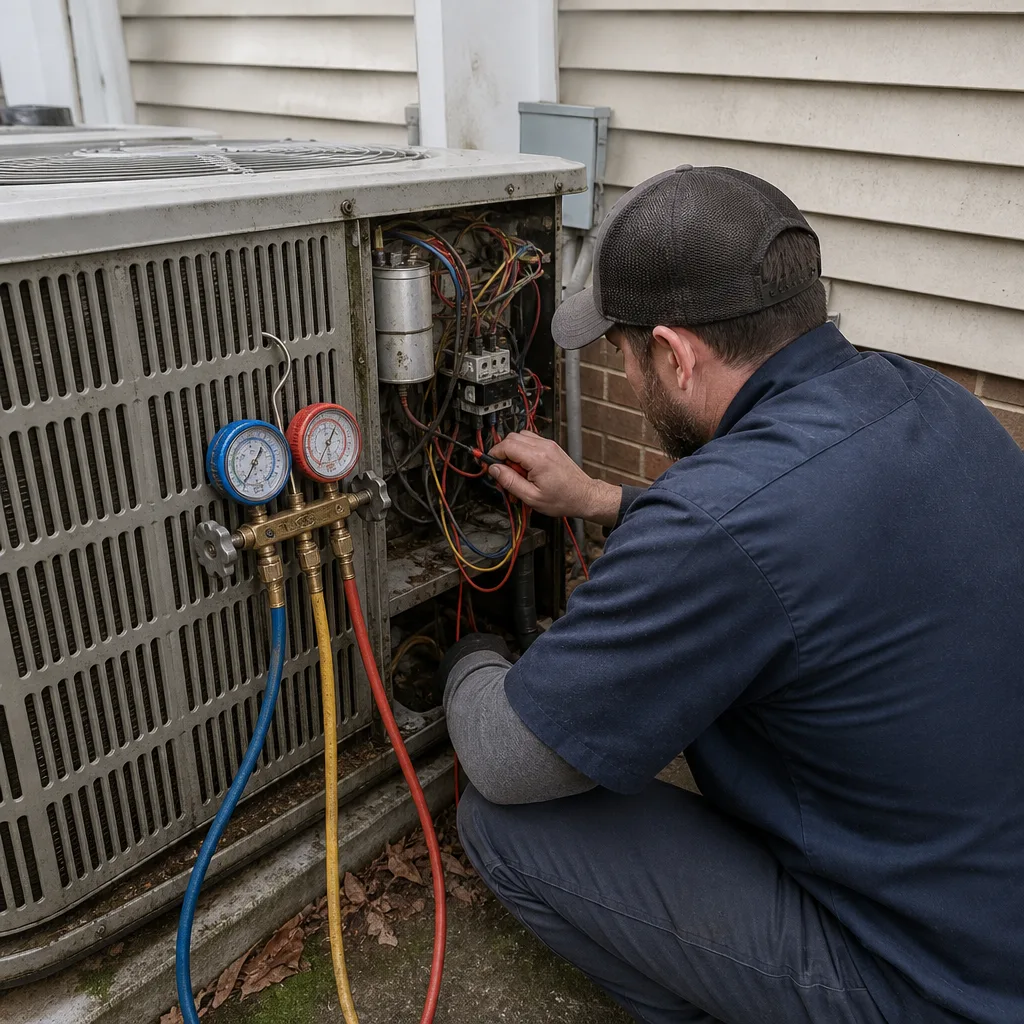 Before
 After
 Before
 After
 Before
 After