
Last updated October 16, 2026
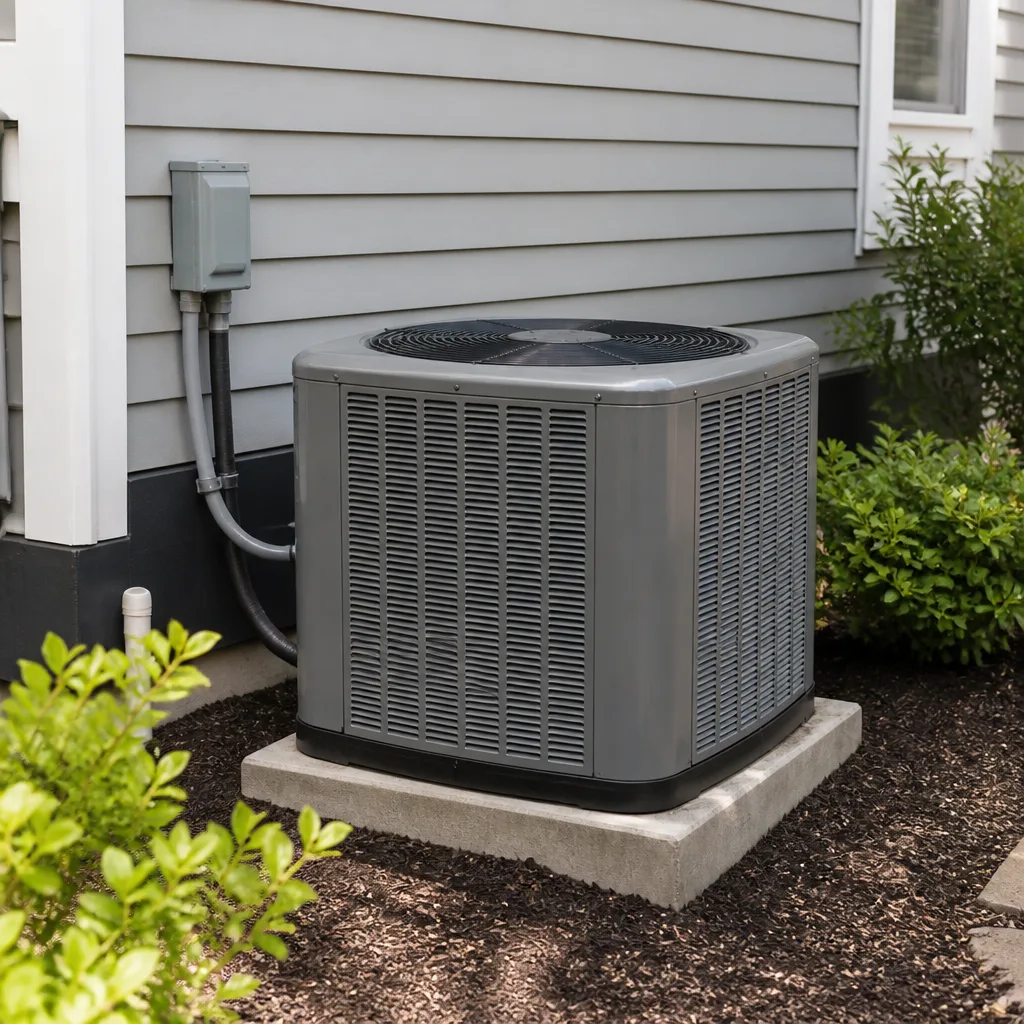 AC repair
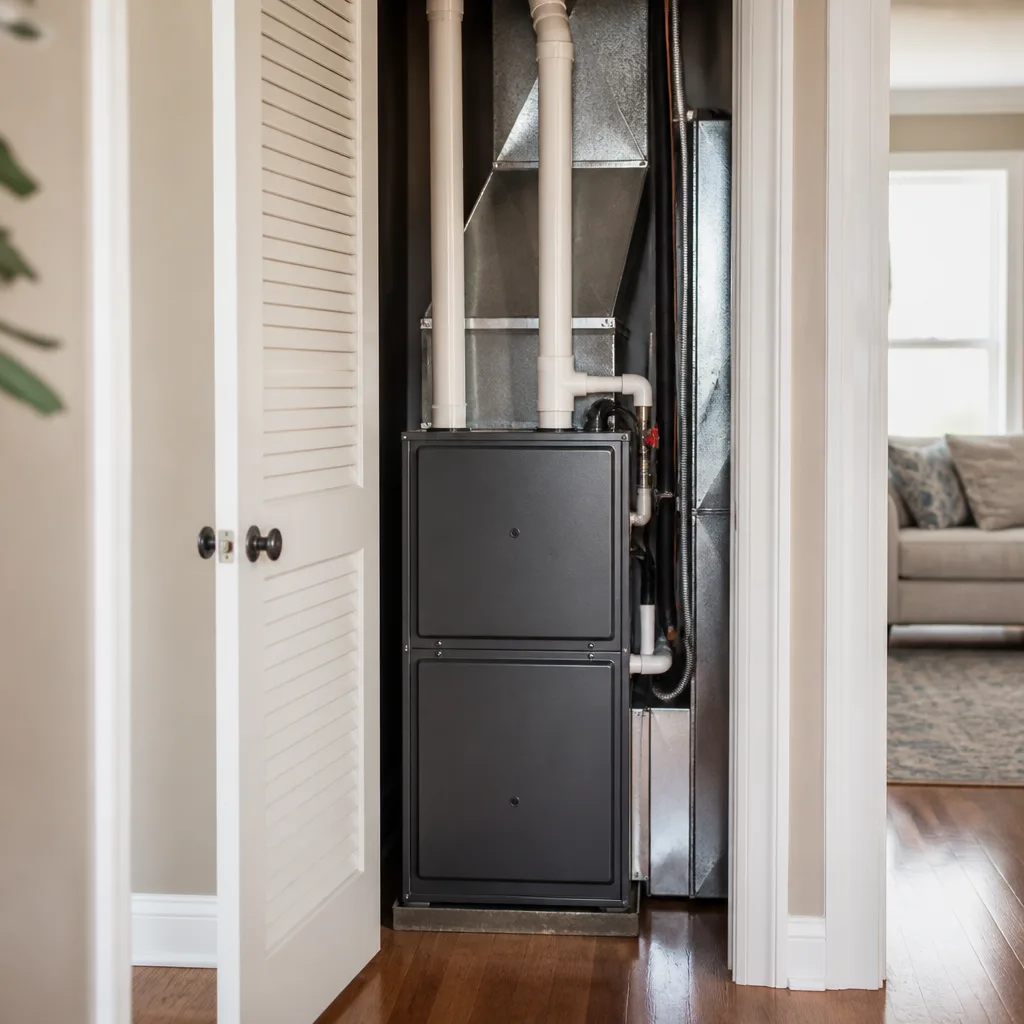 Furnace & heating
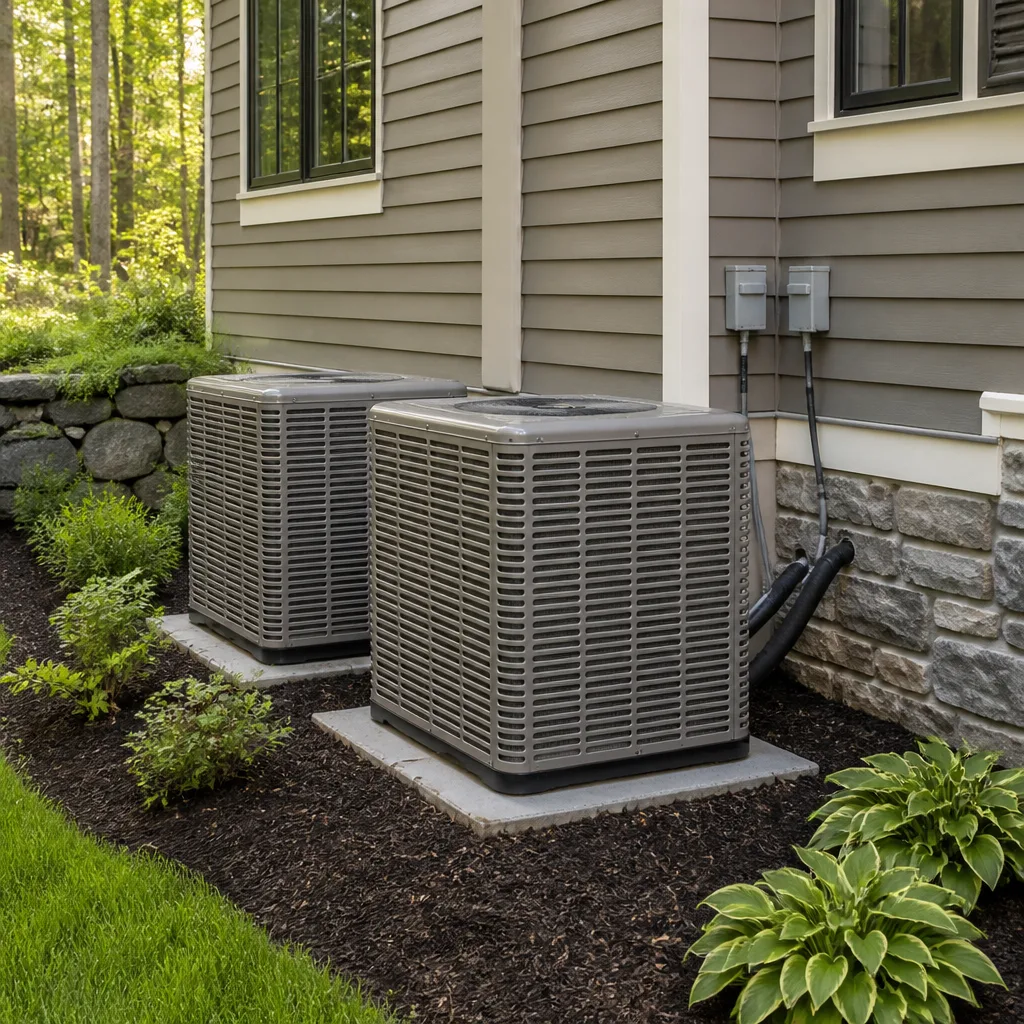 Heat pumps
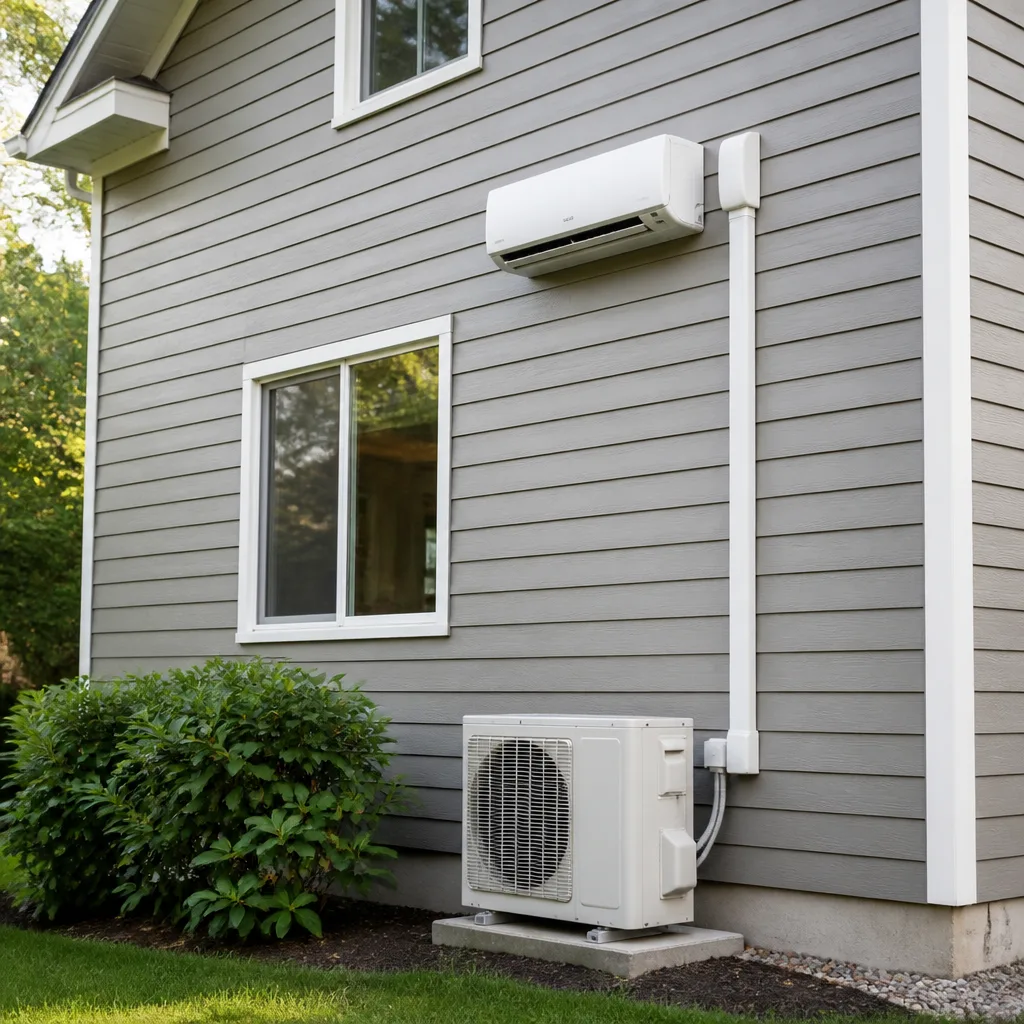 Ductless mini splits
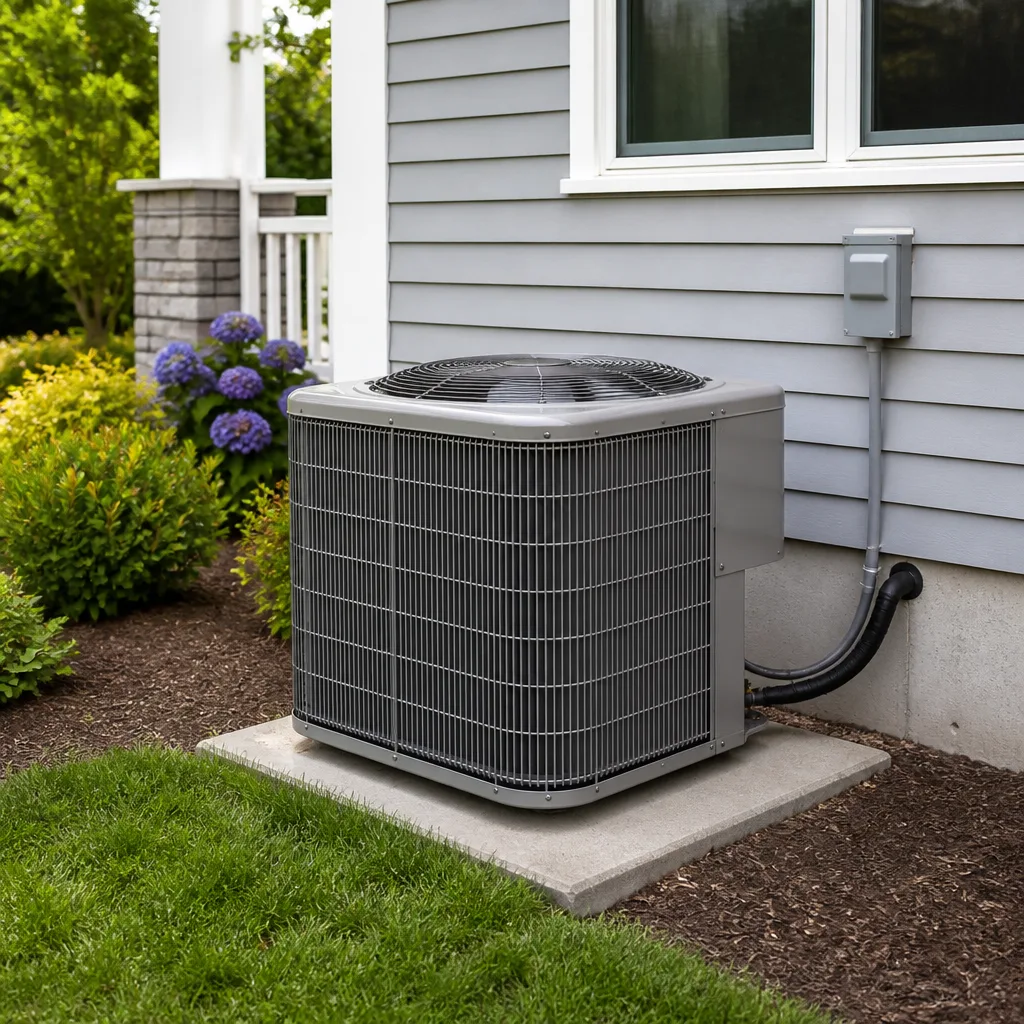 Carrier
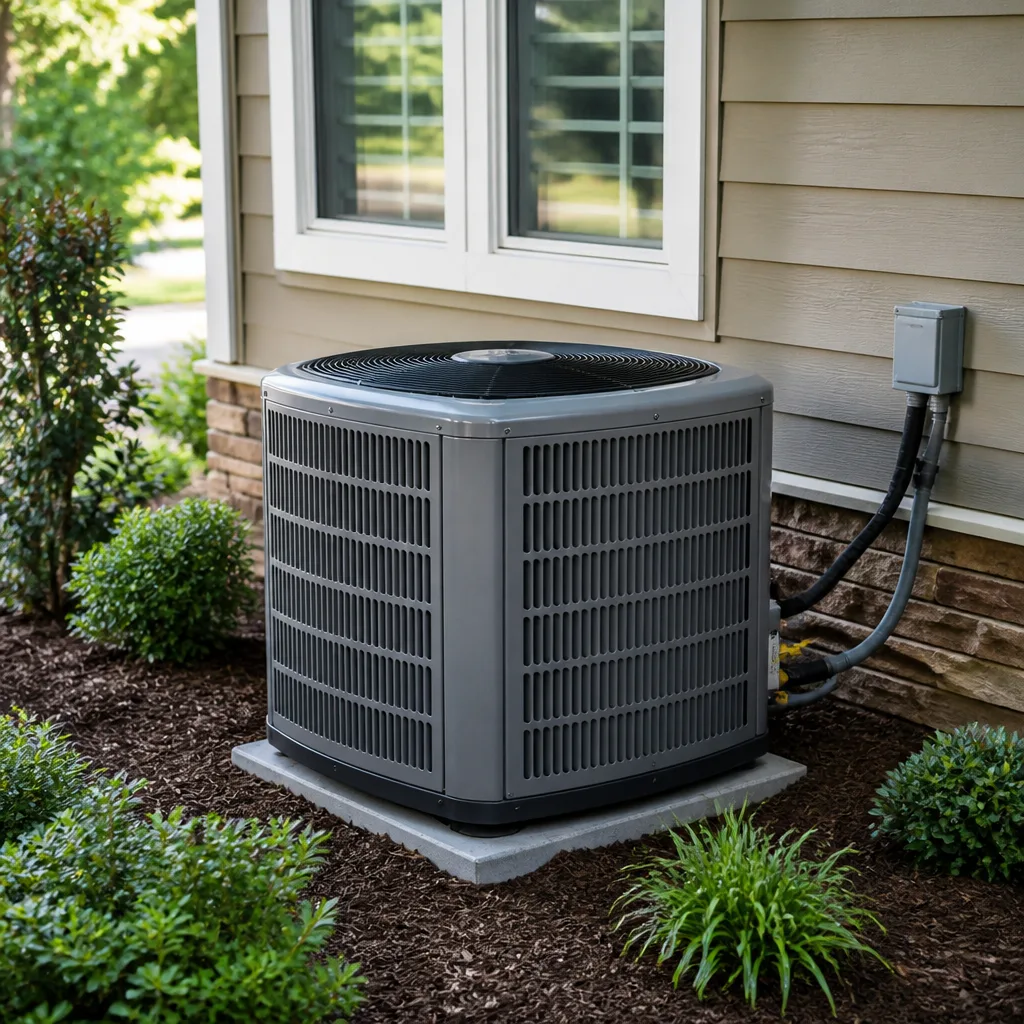 Trane
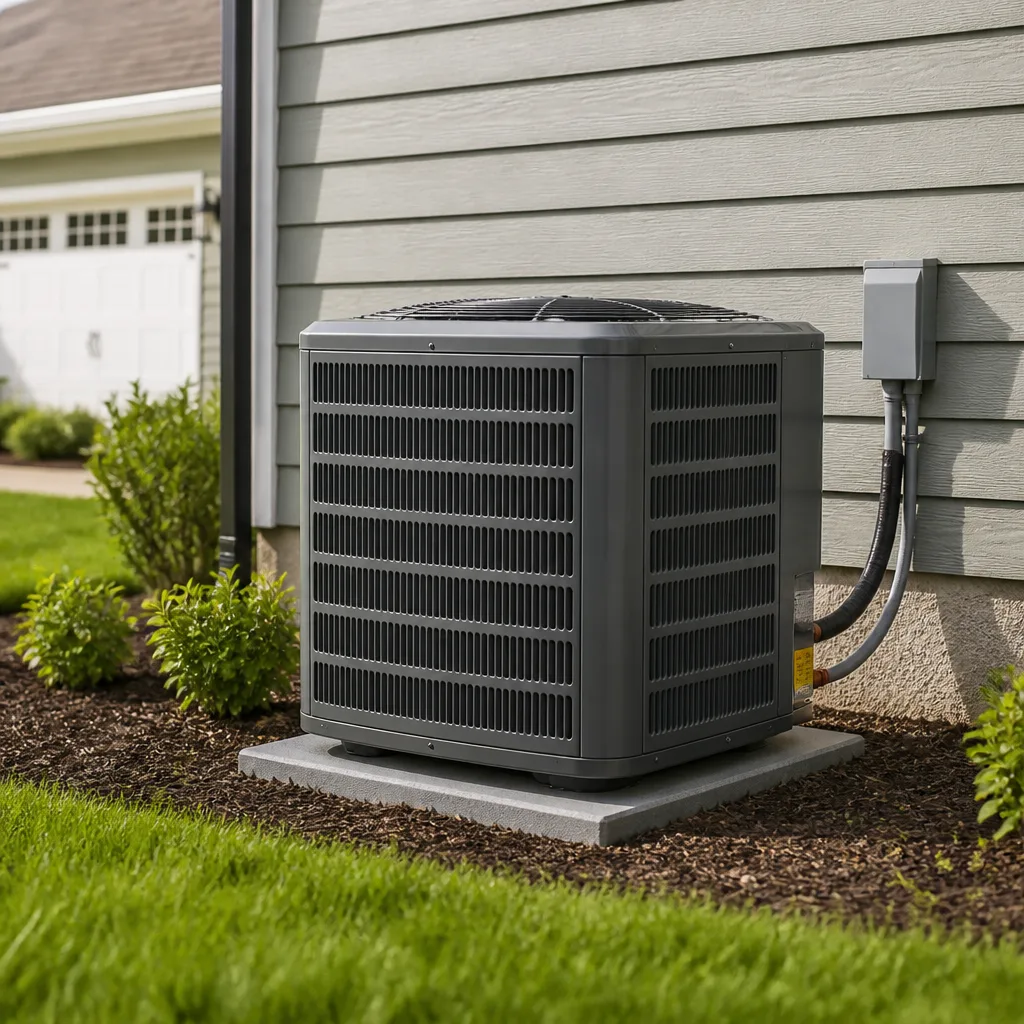 Goodman
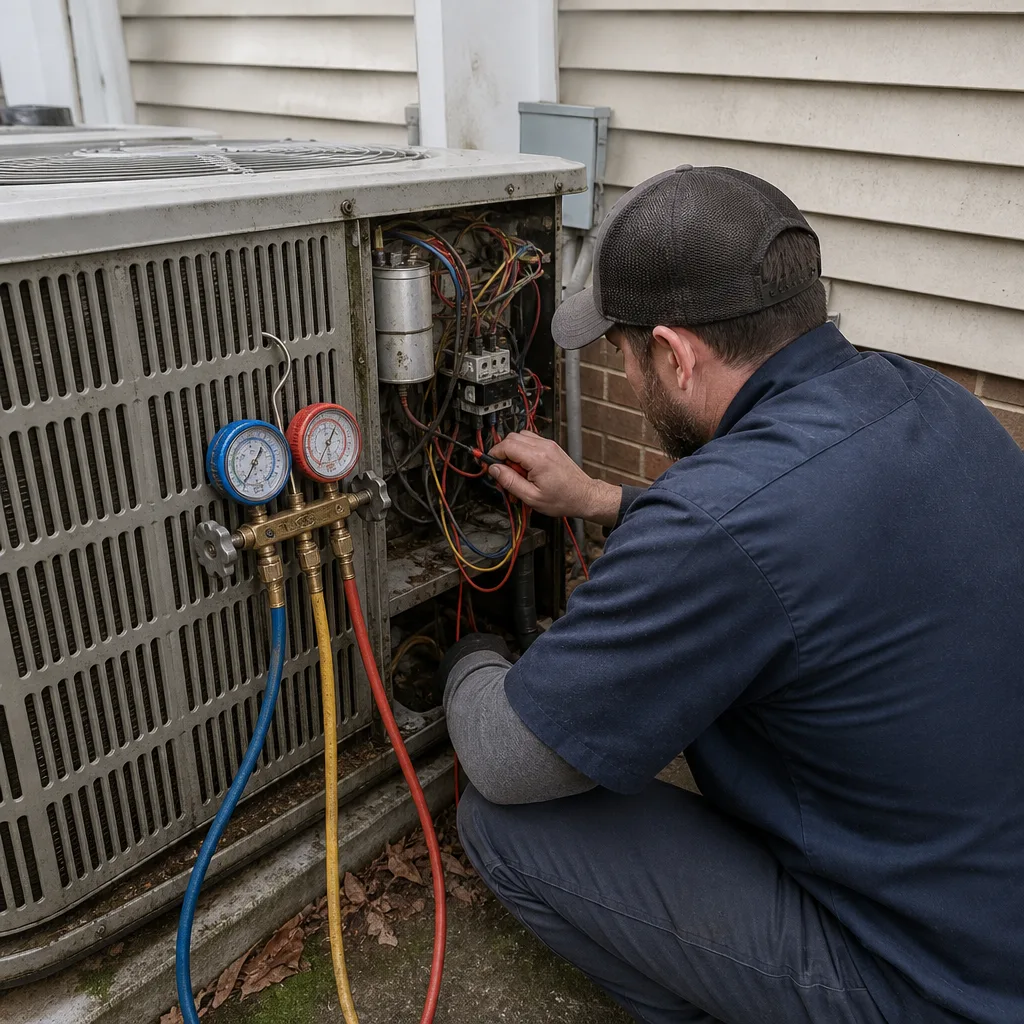
Seasonal tune-up and full diagnostic on your Carrier, Trane, or Goodman system - readings shown to you before any repair is proposed
Diagnosis first, numbers second - you approve the repair price before a single part goes in.
Get your free estimateHVAC Permits, Codes & Inspections in GA: What You Need to Know
In Georgia, an unpermitted HVAC replacement can legally become a “known defect” a seller must disclose. That $300 a contractor saved you by skipping the permit desk can turn into thousands of dollars at closing, a canceled sale, or an insurance claim denial after a fire or water leak. This guide walks through which Sandy Springs and Fulton County HVAC projects actually need permits, what inspectors look for during a rough-in and final inspection, how Georgia’s energy code (now built around ASHRAE 90.1 and mandatory SEER2 ratings) affects your equipment choices, and the step-by-step process for retroactively permitting work that was done without paperwork. For more guides & resources on keeping your system compliant, see our blog. If you’re a homeowner in Sandy Springs weighing a replacement, a buyer checking a property’s history, or a seller wondering what you’re legally required to disclose, this is the full picture.
Styles & brands we work with
Quick Answer
In Georgia, a permit is required any time an HVAC project involves new equipment installation, a full system replacement, new ductwork, or relocation of any component. Simple like-for-like part swaps (a capacitor, a contactor, a blower motor) and routine maintenance do not require permits. Skipping the permit on a project that needs one can void homeowner’s insurance coverage for damage traced to that work, and it becomes something you’re legally obligated to disclose when selling the home. Permits are pulled through the local permitting authority, which for Sandy Springs residents is the City of Sandy Springs Community Development Department, not Fulton County. You can verify whether a permit was ever pulled for any Sandy Springs address through the city’s online permit portal.
Table of Contents
- Why Georgia HVAC Permits Matter More Than You Think
- What HVAC Work Requires a Permit in Georgia
- What Does Not Require a Permit (and Why That Line Matters)
- How the Sandy Springs Permit Process Actually Works
- What a Rough-In Inspection vs. Final Inspection Actually Checks
- The Georgia Energy Code: SEER2, ASHRAE 90.1, and What Changed in 2023
- How to Look Up Open or Closed Permits on Any Sandy Springs Address
- Retroactively Permitting Unpermitted HVAC Work: The Step-by-Step Process
- Common Mistakes to Avoid
- When to Call a Professional
- Frequently Asked Questions
- The Bottom Line
Why Georgia HVAC Permits Matter More Than You Think
Most Georgia homeowners file HVAC permits under “annoying paperwork” in their heads. That’s the wrong mental file. Here’s what a permit actually does, and what its absence actually risks.
First, a permit attaches your HVAC project to a public record that gets inspected by a county or city code official. When the work passes inspection, you have a third-party verification that the installation meets current Georgia code, the manufacturer’s installation instructions, and the minimum efficiency standards for new equipment. When you don’t have that verification, you’re relying entirely on the installer’s word.
Second, unpermitted HVAC work interacts badly with homeowner’s insurance. If a fire starts at an unpermitted furnace, or a water leak originates at an unpermitted air handler and floods a finished basement, the insurance company’s first question is often: “Was this work inspected?” If the answer is no, the claim can be reduced or denied outright. Insurers write policy language that assumes risk for properly permitted improvements. They don’t assume risk for hidden, unverified work.
Third, there’s the disclosure obligation. Georgia law requires sellers to disclose any “known material defects.” An unpermitted HVAC installation becomes exactly that, a known defect, the moment you learn about it. In Sandy Springs real estate transactions, buyers routinely pull permit history during due diligence. If a buyer finds out about the unpermitted unit during inspection, and you didn’t disclose it, you’ve created a legal exposure. If you do disclose it, expect the buyer to demand a price reduction, a retroactive permit, or both.
In our experience across Sandy Springs neighborhoods, the homeowners most surprised by this are the ones who bought a house with unpermitted work done by a previous owner. They didn’t create the problem. They inherited it. But under Georgia law, once they know, they own the disclosure obligation too.
What HVAC Work Requires a Permit in Georgia
The Georgia State Minimum Standard Building Code, adopted by reference in the International Residential Code (IRC) and International Mechanical Code (IMC), governs HVAC permits statewide. Individual jurisdictions like Sandy Springs adopt these codes locally and may add their own administrative requirements. Here’s the practical list of projects that always require a permit.
Projects That Always Require a Permit
- Full system replacement: removing an old furnace, air handler, condenser, or heat pump and installing a new one. Even a swap of the same size and fuel type requires a permit in Sandy Springs, because the code official must verify the new equipment meets current energy code and that the refrigerant lines, electrical disconnect, and condensate drainage are correct.
- New installation: adding HVAC to a home that didn’t previously have central air or a furnace, including mini-split installs.
- Adding or modifying ductwork: new supply or return runs, resizing ducts, adding a zone damper, or relocating registers.
- Relocating equipment: moving a condenser from one side of the house to another, moving an air handler from a closet to an attic, or switching from a slab-mounted condenser to a wall bracket.
- Fuel conversion: changing a furnace from natural gas to propane or from electric to gas. This also triggers a gas line inspection in most jurisdictions.
- Electrical service changes for HVAC: upgrading a breaker, running new circuit wiring, or adding a disconnect box to support new equipment.
In Sandy Springs specifically, the Community Development Department requires permits for all of the above. The permit valuation is based on the fair market value of the installed work, and the fee is calculated from that valuation. A standard full system replacement in Sandy Springs typically falls into a permit fee range of roughly $150 to $400, depending on valuation.
What Does Not Require a Permit (and Why That Line Matters)
Not everything does. Here’s what’s generally exempt, which matters because paying for a permit you don’t need is wasted money, and skipping one you do need is riskier than most people realize.
Typically Exempt From Permits
- Like-for-like part replacements: a failed capacitor, contactor, blower motor, inducer motor, igniter, flame sensor, thermostat, or condenser fan motor. These are components, not systems. Replacing them does not change the equipment’s operating characteristics.
- Routine maintenance and tune-ups: coil cleaning, filter replacement, refrigerant level checks (on systems that don’t have a leak), belt adjustments, drain line flushing.
- Refrigerant top-offs: adding refrigerant to a system that is slightly low, provided no major component replacement accompanies the work. Note: if a system has a significant leak, simply topping it off repeatedly is both wasteful and increasingly regulated, and finding the leak often leads to a repair that may itself require a permit.
The line between “repair” and “replacement” is where the confusion lives. Replacing a blower motor is a repair. Replacing an entire air handler because the coil froze and trashed the cabinet is a replacement, and it requires a permit. Replacing an outdoor condenser because the compressor seized but keeping the existing indoor coil? That depends on the jurisdiction and the inspector. In Sandy Springs, any time the equipment’s nameplate changes, the city generally treats it as an installation requiring a permit.
If you’re unsure whether your specific project needs a permit, the quickest way to find out is to call the Meadowsweet Heating and Air Sandy Springs home line and describe the work. We can tell you over the phone whether it’s a permit-required project in Sandy Springs, and we’ll handle the permit application as part of the job if it is.
How the Sandy Springs Permit Process Actually Works
Sandy Springs handles its own permitting through the Community Development Department, located in the city government complex. You don’t go through Fulton County for HVAC permits within Sandy Springs city limits. Here’s how a typical permitted HVAC installation proceeds, from start to finish.
The Standard Process for a Permitted HVAC Replacement in Sandy Springs
- Contractor prepares the scope of work. Before anything is filed, the installing contractor writes up exactly what’s being installed: equipment model numbers, SEER2 ratings, BTU capacities, location, electrical amp draw, and any ductwork changes.
- Permit application is submitted. In Sandy Springs, this is typically done through the online portal. The application includes the scope of work, the contractor’s state HVAC license number, and the valuation of the project.
- Permit fee is paid. Fee is calculated as a percentage of the project valuation. For most residential replacements, it lands between $150 and $400.
- Permit is issued. Once issued, the contractor posts the permit card in a visible location, usually at the front door or electrical panel area, for the duration of the job.
- Work is performed. The contractor installs the equipment according to the submitted scope and the manufacturer’s installation manual.
- Rough-in inspection (if required). This happens before walls or ductwork are closed up, and it checks things like duct sizing, flue pipe routing, electrical rough wiring, and line set routing.
- Final inspection. The inspector verifies the completed installation against the submitted scope and the adopted code. This includes panel clearances, condensate drainage, refrigerant line protection, combustion air, venting, and equipment data plate compliance.
- Permit is finalized and closed. Once the inspector signs off, the permit status changes to “finaled” or “closed” in the city’s system. This is the proof you want in your file, and it’s what a future buyer’s agent will look for.
Timeline: a straightforward replacement permit in Sandy Springs can be issued within one to two business days. Inspections are typically scheduled within 24 to 48 hours of the work being ready. A full system replacement with no complications usually goes from application to finaled permit in about three to five business days.
What a Rough-In Inspection vs. Final Inspection Actually Checks
If you’ve never watched an HVAC inspection, the checklist might surprise you. Inspectors aren’t just glancing at the unit. They’re verifying details most homeowners never see, and those details are exactly where unpermitted installations tend to fail.
Rough-In Inspection
A rough-in happens mid-installation, before the equipment is fully finished or before walls and ceiling cavities are closed. In a new duct installation or a full remodel, the inspector checks:
- Duct sizing and routing: Are supply and return ducts properly sized for the equipment’s airflow requirements? Are they routed through conditioned or unconditioned space, and are they insulated if in unconditioned space (attics, crawlspaces)?
- Refrigerant line set: Is the copper line set properly sized, supported, and protected from physical damage? Are the lines running through wall or floor penetrations sleeved?
- Electrical rough-in: Is the circuit sized correctly for the equipment’s minimum circuit ampacity? Is the disconnect location compliant (within sight of the unit, accessible)?
- Flue and venting: For gas furnaces, is the flue pipe properly supported, sloped, and made of the right material? Is the termination point in the right location relative to windows and doors?
- Condensate drainage planning: Has the installer planned a proper drain with a trap, slope, and termination point that won’t pool water against the foundation or into a crawlspace?
In our experience in Sandy Springs, the most common rough-in failures are undersized return ducts in attic installations and improperly sloped condensate lines. Both are fixable at rough-in and far harder to correct after drywall goes up.
Final Inspection
The final inspection happens after the equipment is fully installed and running. The inspector checks that the finished work matches the approved permit scope and that the installation meets the adopted code. Typical checks include:
- Equipment data plate: The inspector reads the model and serial number on the installed unit and verifies it matches the permit application. A different unit than what was permitted means a failed inspection.
- Clearances: Airflow clearance around the condenser (usually 12 inches minimum on the back and sides), service clearance for coil access, and working space in front of the electrical panel serving the equipment.
- Condensate management: Is the drain line trapped, sloped, and terminated in an approved location? In Sandy Springs attics, secondary drain pans with a wet-switch or float-switch shutoff are a common requirement, and inspectors check for them.
- Refrigerant lines: Are the line sets insulated on the suction line? Are they supported at intervals that prevent sagging and vibration wear?
- Electrical terminations: Are wire connections made with proper connectors inside the disconnect and the equipment’s electrical compartment? Is the disconnect properly mounted and accessible?
- Combustion air (gas furnaces): Is there enough combustion air for the furnace? In modern high-efficiency condensing furnaces, this includes verification of the intake pipe routing.
- Startup verification: The inspector may ask the contractor to demonstrate the system running through a full cycle, including the thermostat call, blower operation, and condenser start.
After the final passes, the permit is finalized. That finalized permit is the single most valuable piece of paper in the project, for insurance and resale purposes, even though most homeowners never look at it again.
The Georgia Energy Code: SEER2, ASHRAE 90.1, and What Changed in 2023
Georgia’s energy code for residential construction is based on the International Energy Conservation Code (IECC), with a state-specific overlay referencing ASHRAE 90.1. The practical impact on HVAC work is this: any new equipment installed in Georgia after January 1, 2023, must meet the new SEER2 efficiency minimums. Here’s what that means in plain terms.
SEER vs. SEER2: What Actually Changed
SEER (Seasonal Energy Efficiency Ratio) was the old testing standard. SEER2 uses a more realistic test procedure that accounts for the actual external static pressure in real duct systems. The result is that a SEER2 number is generally about 4-5% lower than the old SEER rating for the same equipment. When you see a unit rated 14.3 SEER2, that’s roughly equivalent to what used to be called a 15 SEER unit.
Minimum Efficiency Requirements for New Installations in Georgia (as of 2023)
| Equipment Type | Minimum Efficiency (new installs) |
|---|---|
| Split-system air conditioner (under 45,000 BTU/hr) | 14.0 SEER2 |
| Split-system air conditioner (over 45,000 BTU/hr) | 13.8 SEER2 |
| Split-system heat pump | 14.0 SEER2 / 8.1 HSPF2 |
| Package unit (air conditioner or heat pump) | 13.4 SEER2 |
| Furnace (gas, non-weatherized) | 81% AFUE minimum |
In Sandy Springs, where summer highs sit in the upper 80s and low 90s for months, the efficiency minimum matters more on paper than in practice. Most homeowners choose units above the minimum because the payback on a 16 SEER2 versus a 14 SEER2 unit in Georgia’s cooling season is measured in a handful of years, not decades. The brand you pick also matters, and we work regularly with Goodman, Daikin, and Rheem equipment, all of which have strong options in the 15-17 SEER2 range at mid-tier price points.
One more thing about Georgia’s energy code: it requires that when a new system is installed, the contractor verify and document that the equipment is sized using a load calculation (Manual J or equivalent). That’s not optional. A contractor who slaps in the same size unit “because that’s what was there” without a load calc is skipping a code requirement. When you get a written proposal from any contractor in Sandy Springs for a full system replacement, ask to see the load calculation. It should be part of the proposal, not an afterthought.
How to Look Up Open or Closed Permits on Any Sandy Springs Address
Finding out whether a permit was ever pulled for a specific property is a skill every Sandy Springs home buyer and seller should have. It takes ten minutes, and it can change the conversation about a house entirely.
Step-by-Step Permit Lookup for a Sandy Springs Property
- Go to the City of Sandy Springs Community Development Department portal. The city maintains an online permit search tool accessible from the city’s official website. You don’t need to create an account to search.
- Enter the property address. Use the full street number and street name. Don’t include “Sandy Springs” in the address line, the system already knows the jurisdiction.
- Review the permit list. The search returns all permits associated with that address: HVAC, electrical, plumbing, building, and demolition. Each permit shows a status: “issued,” “under review,” “finaled,” “expired,” or “voided.”
- Look for “finaled” HVAC permits. A finaled permit means the work was inspected and passed. If you see an issued permit that was never finaled, that’s a red flag worth chasing down. An open permit with no final inspection means the work was never verified.
- Note the dates and contractor names. Cross-reference the permit date with any HVAC replacement or major repair dates you know from the seller’s disclosure or your own records.
If the search shows no HVAC permit at all for a house that clearly has a newer-looking condenser or furnace, that doesn’t automatically mean the work was done illegally. Some work genuinely doesn’t require a permit. But it does mean you should ask the seller directly: “When was the HVAC replaced, and was it permitted?” A seller who can’t answer that question clearly is a signal to investigate further.
If you’re a buyer in Sandy Springs and you want someone to walk the property while you’re doing your due diligence, we do that as part of our free estimate visits. We’ll note the equipment brand, apparent age, install quality, and any visible code concerns, and we’ll help you understand whether the permit history matches what’s on the pad in the backyard. Call AC Repair in Sandy Springs for a no-pressure look.
Retroactively Permitting Unpermitted HVAC Work: The Step-by-Step Process
So you’ve discovered the HVAC was replaced without a permit. Maybe you bought the house that way. Maybe a previous contractor told you “you don’t need a permit for that” and you later learned otherwise. Either way, there’s a path to fix it. It’s not free, and it’s not usually instant, but it’s a well-defined process in Fulton County and Sandy Springs.
What Retroactive Permitting Actually Involves
- Document what’s there. Write down the equipment brand, model, serial number, and installation date if you know it. Take photos of the data plate, the electrical disconnect, the condensate drain, and the overall installation.
- Call the Sandy Springs Community Development Department. Ask to speak with a plans examiner or permit technician about “permit after the fact” for HVAC. They’ll explain the exact paperwork required. In most cases, the process is the same as a regular permit, with an additional “work already performed” note on the application.
- Have a licensed HVAC contractor assess the work. This is the critical step. Before you invite an inspector to look at the installation, you want a state-licensed contractor to walk it and flag anything that won’t pass. Common retroactive failures in Sandy Springs: undersized electrical circuits, missing secondary condensate pans in attics, improper venting on gas furnaces, and missing manual disconnects.
- Correct any deficiencies. If the contractor finds problems, fix them before the inspector arrives. This is the expensive part of retroactive permitting, and it’s exactly where the “$300 saved” turns into “$800 to $2,000 to correct.”
- Submit the permit application with the contractor’s license. The contractor pulls the permit in their name, just as they would for a new installation. The valuation is based on the value of the equipment and work already in place.
- Schedule an inspection. The inspector will do a final-style inspection on the existing work, checking the same items they’d check for a new installation. If it passes, the permit is finaled and the record reflects the work as permitted.
- Keep the finaled permit. Attach it to your closing documents if you’re selling, or file it with your home records. This is the piece of paper that resolves the disclosure obligation.
Timeline: in our experience, the whole retroactive process in Sandy Springs takes anywhere from one week to a month, depending on whether corrections are needed and how quickly the city schedules the inspection. Cost: the permit fee itself is the same as a new application, typically $150 to $400, but the corrective work is the real variable. A minor fix like a secondary drain pan might cost $200 to $500. Rewiring a circuit for a larger condenser can run $400 to $900. If the installation was genuinely substandard, the correction could be more than the original install.
And here’s the least fun part: if the work was done so badly that it can’t be brought to code, the fix is a full replacement. That’s rare. Most retroactive permits succeed with modest corrections.
Common Mistakes to Avoid
- Trusting a contractor who says “you don’t need a permit” without checking. Some contractors genuinely believe this for certain jobs. Some are just avoiding the fee and the inspection. Either way, you’re the one holding the risk. In Sandy Springs, any full system replacement needs a permit, period.
- Not keeping the finaled permit after the job. The permit is the proof. Without it, you’re back in the “known defect” gray zone if you sell. Keep the finaled permit with your house records, the way you’d keep a title or a warranty registration.
- Assuming the home inspector will catch an unpermitted install during a sale. Home inspectors look at condition, not permit history. Some will note “appears newer, no permit records found” but many won’t mention it at all. The due diligence is on the buyer, not the inspector.
- Paying a deposit before the permit is pulled. In Sandy Springs, the permit application should be part of the project kickoff, not an afterthought. If a contractor wants a 50% deposit and still hasn’t filed the permit a week later, ask why.
- Replacing equipment with the wrong efficiency rating. In Georgia, installing a new unit below the SEER2 minimum is a code violation, not just an energy concern. Most reputable suppliers won’t even sell non-compliant equipment for residential installs anymore, but it happens.
- Ignoring the secondary condensate pan requirement for attic installs. In Sandy Springs, an air handler in the attic without a secondary pan and shutoff switch is one of the most common final inspection failures. It’s also one of the most common sources of ceiling water damage when skipped.
- Assuming the permit process adds weeks to the job. In Sandy Springs, a routine HVAC permit is fast. The fear of delays is usually worse than the actual delay. A good contractor handles the paperwork in parallel with equipment ordering, not sequentially.
When to Call a Professional
If you’re facing any of these situations, the value of a licensed contractor who works in Sandy Springs every day is real: you suspect the HVAC was replaced without a permit and you want it assessed before you buy or sell; you’re planning a full system replacement and want the permit handled properly from day one; you got a red tag or failed an inspection and need someone to correct and re-inspect; or you’ve inherited a house with no clear HVAC paper trail and you want a clean slate. Furnace Repair in Sandy Springs and AC Installation in Sandy Springs are both services we provide with full permit handling included. Meadowsweet Heating and Air Sandy Springs offers free estimates in Sandy Springs, and every quote includes the written permit fee, so there’s no surprise line item later. Call (229) 490-2049 and speak to a live person, 24 hours a day.
Frequently Asked Questions
Yes. In Georgia, a full system replacement (furnace, air conditioner, heat pump, or air handler) requires a building permit from the local jurisdiction, which in Sandy Springs means the City of Sandy Springs Community Development Department. Simple part swaps and routine maintenance do not require a permit. Call (229) 490-2049 for a free estimate on a replacement, and we’ll handle the permit from start to finish.
Most residential HVAC replacement permits in Sandy Springs cost between $150 and $400, calculated as a percentage of the project valuation. Minor repair permits (when required) are typically on the lower end. The fee is always shown as a line item in our written proposals, and we don’t mark it up.
Under Georgia disclosure law, you must disclose the unpermitted work once you know about it. Failing to disclose can create legal exposure after closing. The practical fix is to retroactively permit the work: have a licensed contractor assess it, correct any deficiencies, pull the permit, and get it finaled. Then hand the finaled permit to the buyer at closing. For an assessment, call (229) 490-2049.
Not reliably. Home inspectors look at visible condition and function, not permit history. They may note that equipment looks newer than the house or appears to have been recently installed, but they don’t have access to the city’s permit database during a standard inspection. The buyer or seller must run the permit search separately through the Sandy Springs portal.
For split-system air conditioners under 45,000 BTU/hr, the minimum is 14.0 SEER2. For larger split systems, it’s 13.8 SEER2. Heat pumps need at least 14.0 SEER2 and 8.1 HSPF2. Package units have lower minimums at 13.4 SEER2. These are Georgia code minimums, not recommendations, and most Sandy Springs homeowners choose units above the minimum for better summer performance.
Go to the City of Sandy Springs Community Development Department online permit search, enter your full street address, and review the returned permit list. Look for HVAC permits with a “finaled” status. An “issued” permit that was never finaled means the work wasn’t inspected, and a missing permit for a full replacement means the work was likely unpermitted. If you want help interpreting what you find, call (229) 490-2049 and we’ll walk through it with you.
The Bottom Line
HVAC permits in Georgia are not optional for full replacements, and they’re not just bureaucracy. A finaled permit is your proof that the work was inspected, your defense against insurance claim denials, and your clean disclosure when you sell. Skipping it saves a contractor a few hundred dollars and shifts thousands of dollars of risk onto you. The good news is that Sandy Springs has a fast, predictable permitting process, and retroactive permitting is a well-worn path for fixing past mistakes. Whether you’re replacing now or cleaning up a property’s paper trail, the rule is simple: permit it, inspect it, final it, and keep the paper. If you want a crew that handles the permit as part of the job, protects your floors with shoe covers and drop cloths, and sends a photo of the clean-up before leaving, call Meadowsweet Heating and Air Sandy Springs at (229) 490-2049 for a free estimate, any time.
Written by Luis Serrano, Owner at Meadowsweet Heating and Air Sandy Springs, serving Sandy Springs since 2004.
See the difference
 Before
 After
 Before
 After
 Before
 After