
 Furnace & heating
 AC repair
 Heat pumps
 Ductless mini splits
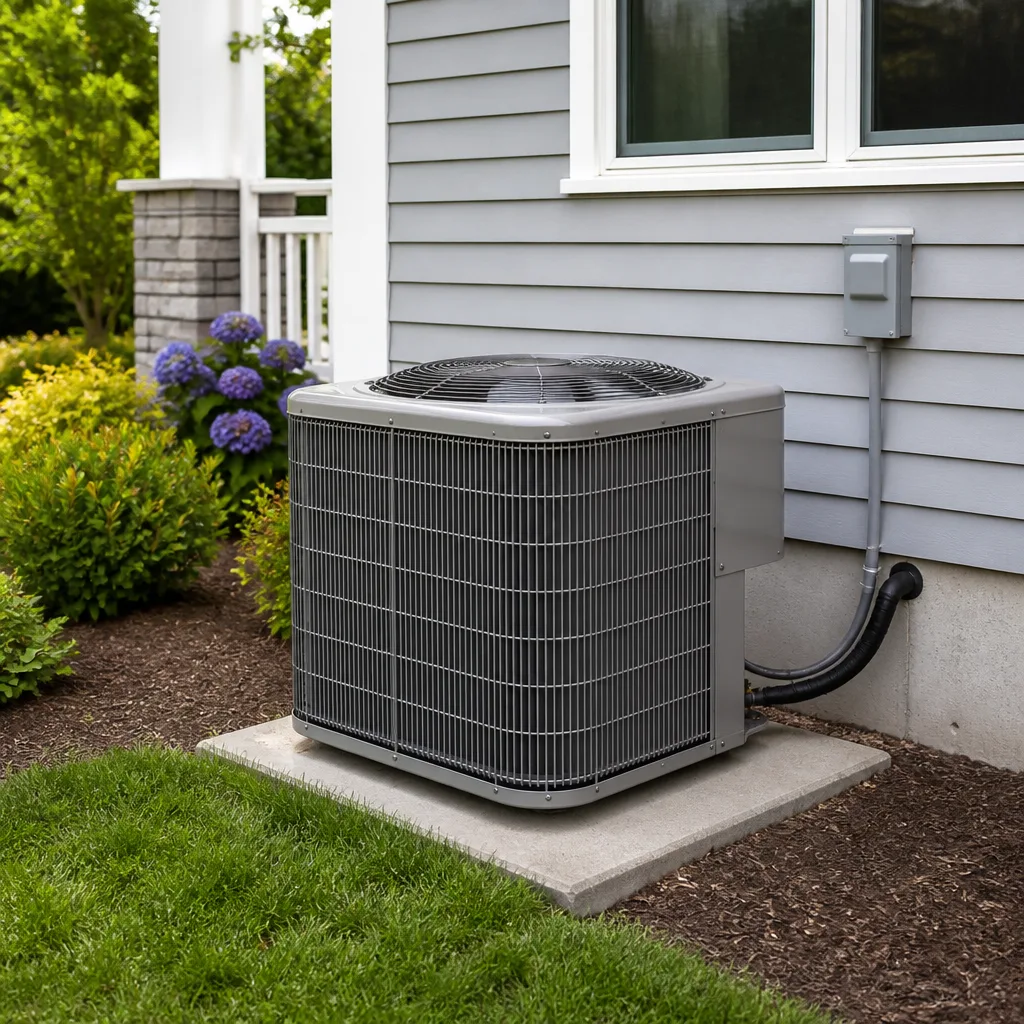 Carrier
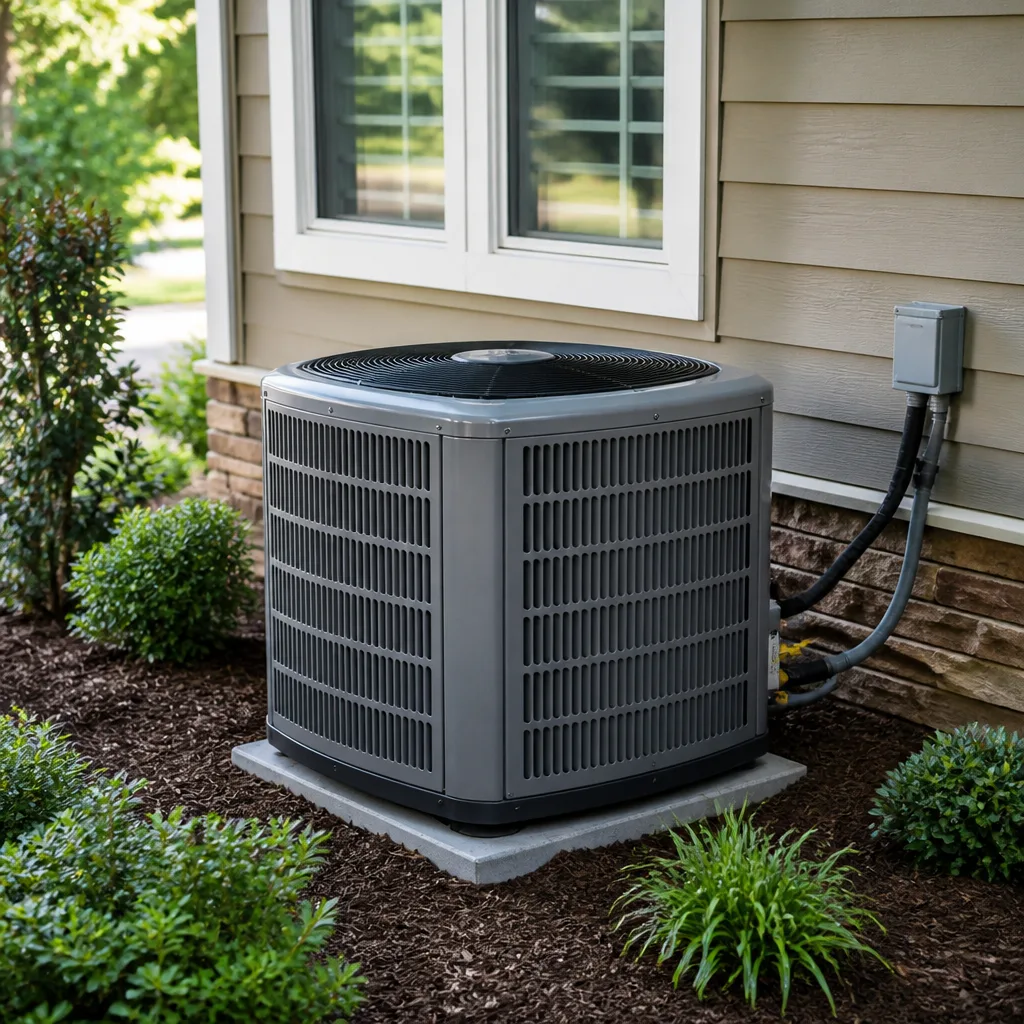 Trane
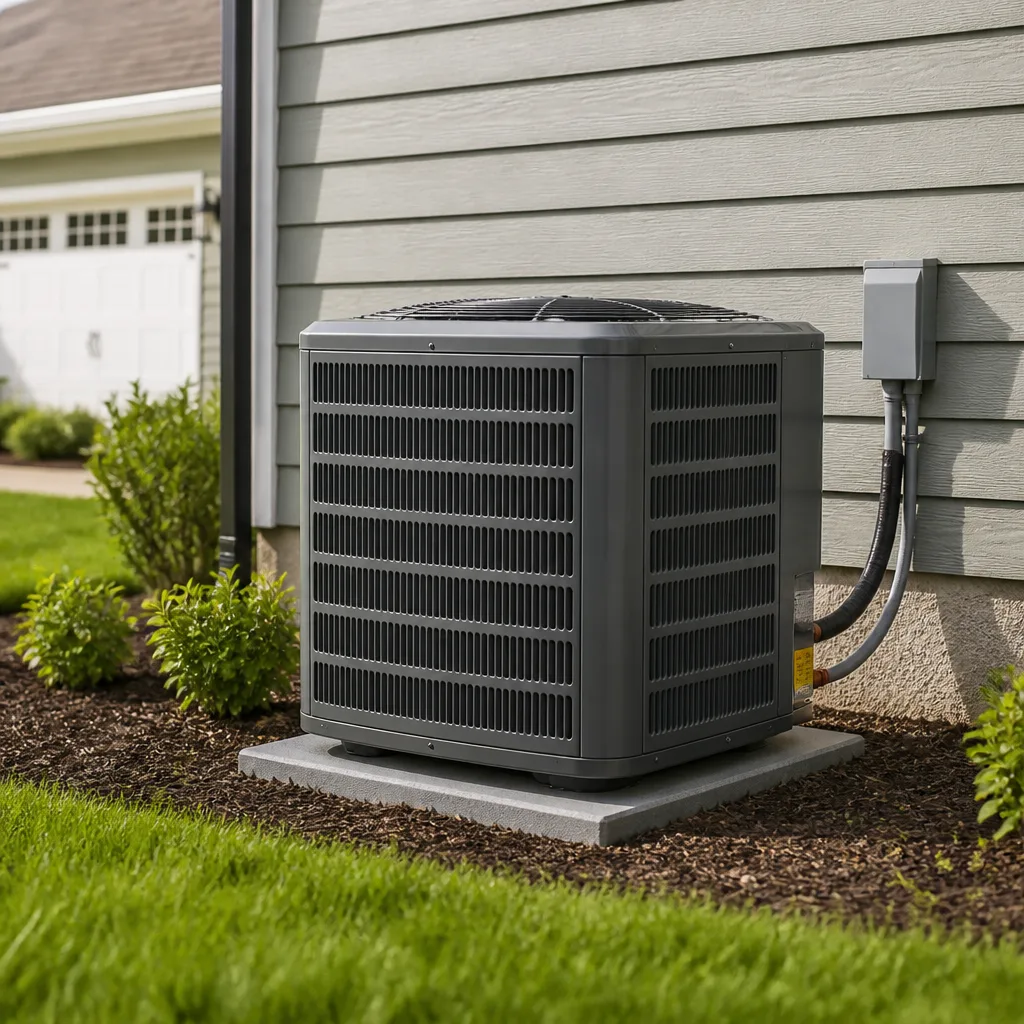 Goodman
Seasonal tune-up and full diagnostic on your Carrier, Trane, or Goodman system - readings shown to you before any repair is proposed
Diagnosis first, numbers second - you approve the repair price before a single part goes in.
Get your free estimateCarrier Capacitor Replacement: The Sandy Springs Owner’s Guide
We stock and install Carrier-compatible capacitor replacements across Sandy Springs, with typical installed pricing running $150 – $650 depending on whether it’s a single or dual capacitor and your unit’s age. Most failures show up as an air conditioner or heat pump that hums but won’t start, with same-day service available when you call (229) 490-2049. In our experience across Riverside, Dunwoody, and north Sandy Springs, capacitors are the single most common part to fail during a Georgia heat wave, because sustained high temperatures and humidity slowly cook the dielectric inside. The good news is that a capacitor swap is one of the fastest, most affordable HVAC repairs there is.
Key Takeaways
- Carrier capacitors typically last 5 – 10 years in Georgia heat, often less with frequent cycling
- Installed replacement in Sandy Springs runs $150 – $650, parts and labor included
- We carry OEM and quality aftermarket capacitors on the truck for most Carrier models
- Same-day replacement is available when the part is in stock, which it usually is
- This is a repair with live electrical components: we recommend a trained technician
Which Carrier Models This Applies To
Carrier has used capacitors across a wide range of residential equipment, from the older Comfort series to the current Infinity, Performance, and Comfort lines. The part you need depends on whether your system has a start capacitor, a run capacitor, or a dual-run capacitor, which is the most common configuration we see in Sandy Springs condensing units. Dual-run capacitors handle both the compressor and the outdoor fan motor, and Carrier typically specs these in ranges from 25/5 microfarads all the way up to 70/10 or higher on larger Infinity systems.
Here’s the compatibility gotcha we see regularly: Carrier has changed capacitor suppliers and mounting brackets across model years. Two units that look identical from the outside can take different capacitor shapes, oval versus round, with different strap diameters and terminal layouts. The only reliable way to match the part is to read the microfarad rating, voltage, and shape from the existing capacitor’s label before ordering or installing anything. We photograph that label on every service call so the replacement matches exactly. Aftermarket capacitors from reputable manufacturers like Titan, AmRad, and Mars can work well and often outlast OEM parts, but we always match the microfarad rating precisely, because Carrier compressors are tuned to a specific capacitance window. Off by more than 6%, and you shorten the life of the compressor itself.
We also stock parts for Trane, Lennox, and six other major brands, so if you have mixed equipment at the house, we can handle the whole picture.
Styles & brands we work with
Signs Your Carrier Capacitor Replacement Is Failing
- The outdoor unit hums but the fan doesn’t spin. That hum is the compressor trying to start without enough capacitance to break the load. A failing capacitor can’t provide the starting torque, so the motor just sits and buzzes until the thermal protector trips. This is the classic call we get from Sandy Springs homeowners on the first 95-degree afternoon of the season.
- Your AC takes longer to cool or short-cycles. A weak capacitor can still start a compressor, but it drags the start-up longer than it should. You might notice the system turning on and off more frequently, or rooms that used to hit 72 degrees now hover at 76. Low capacitance also draws more amperage, which shows up as heat at the compressor.
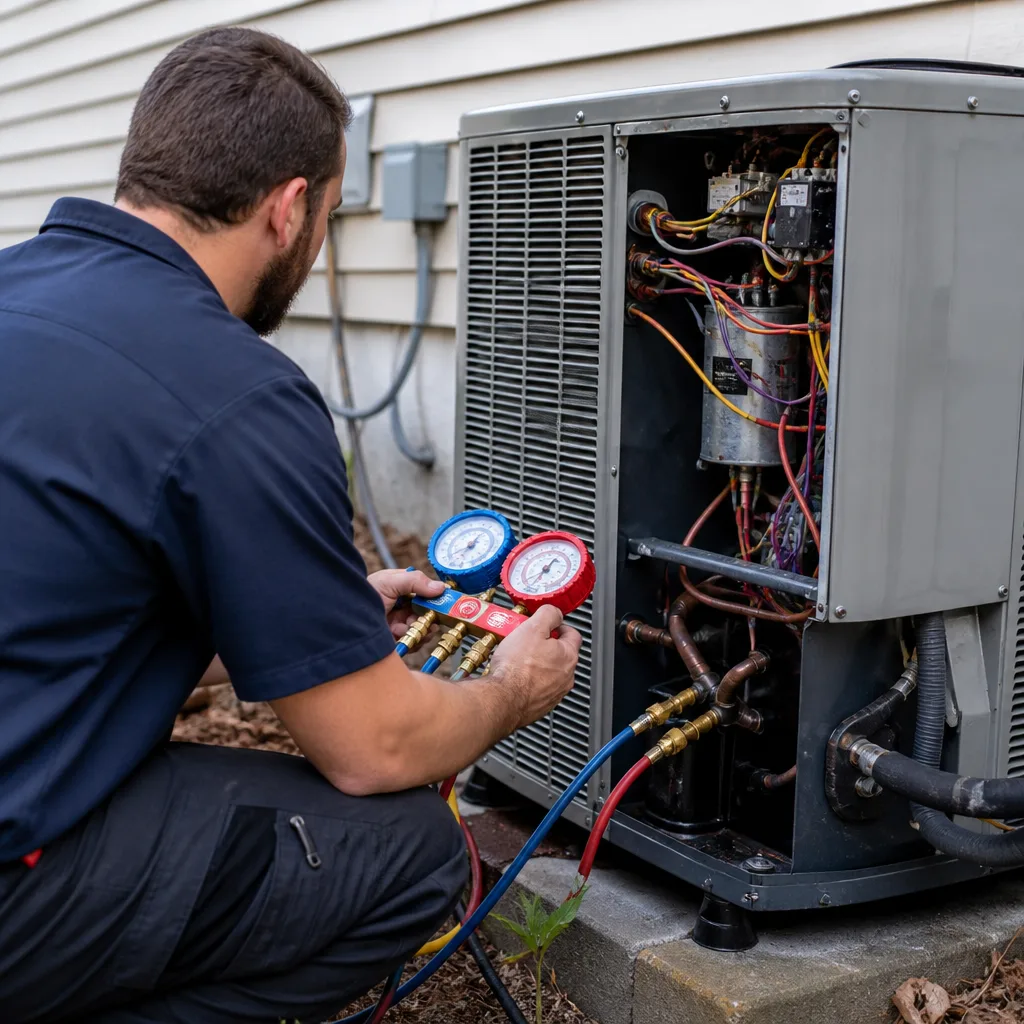
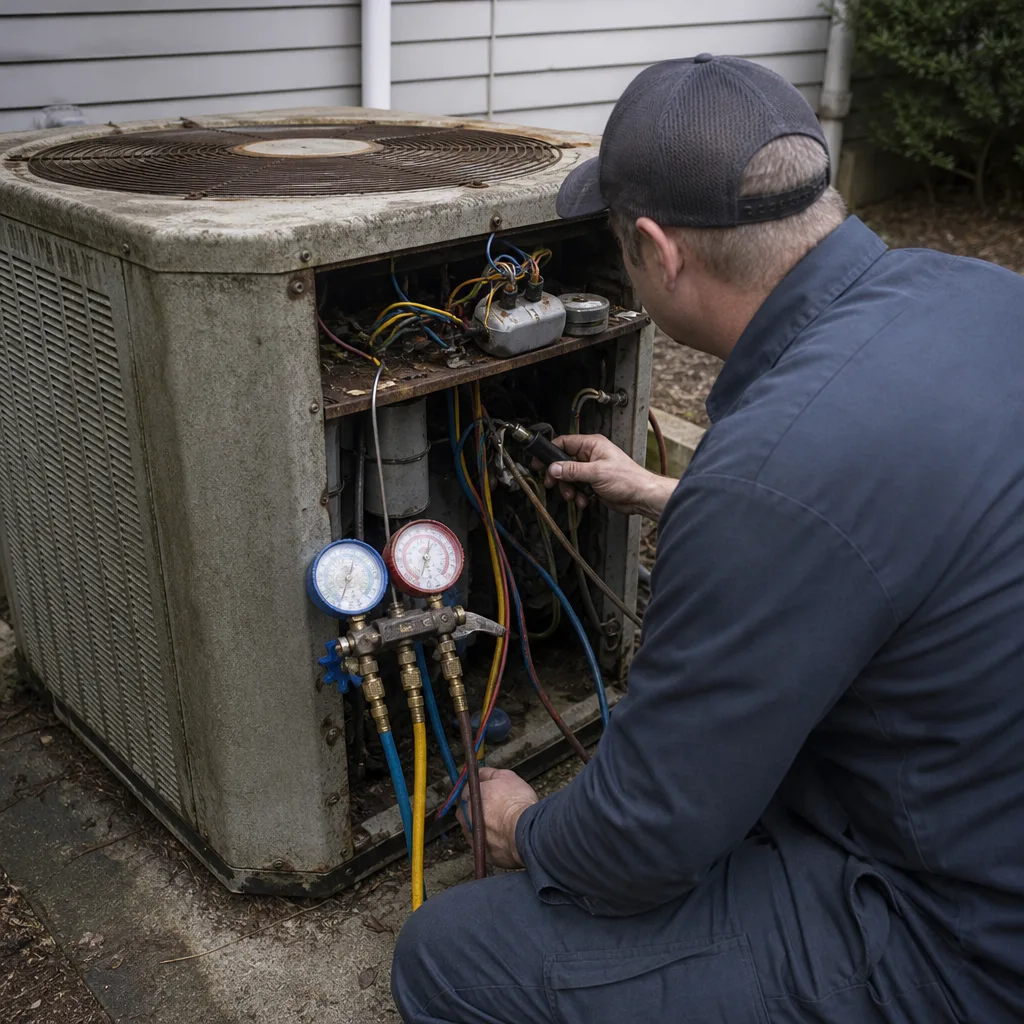
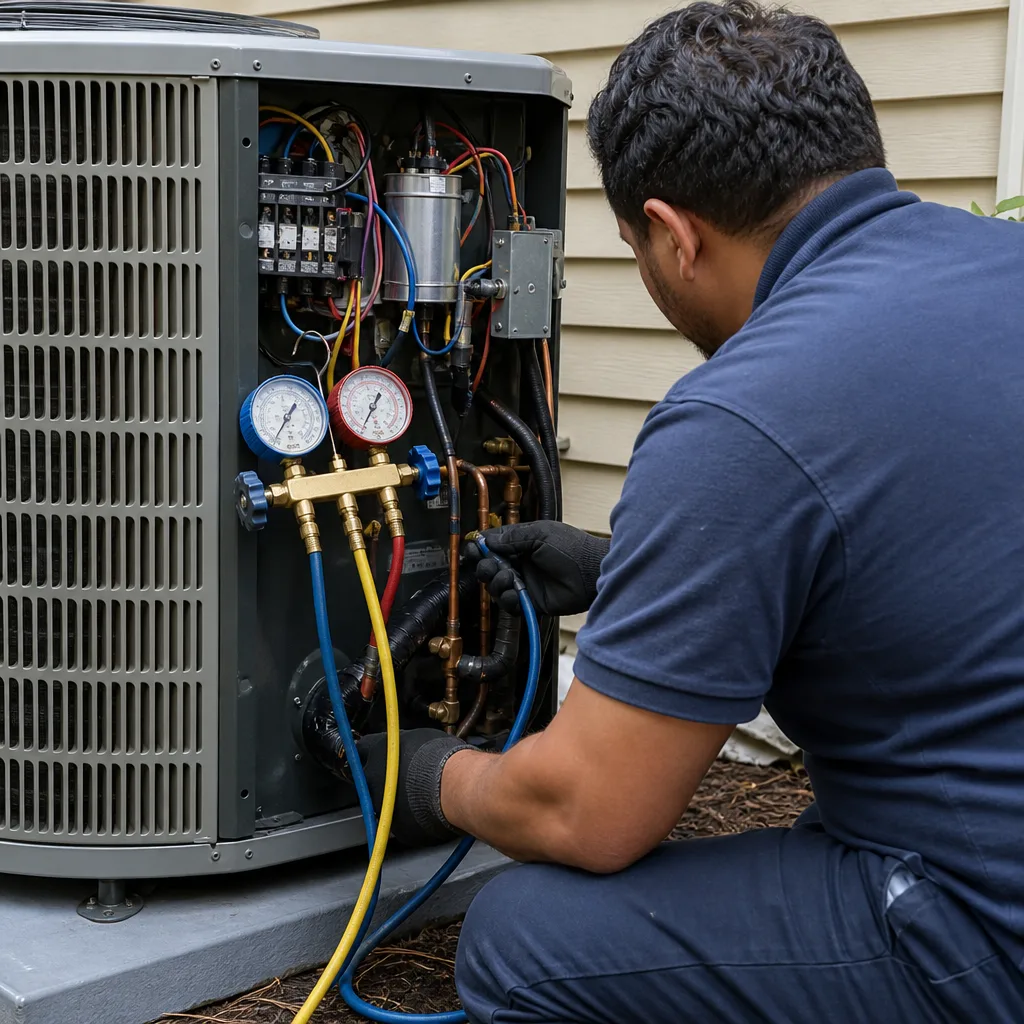
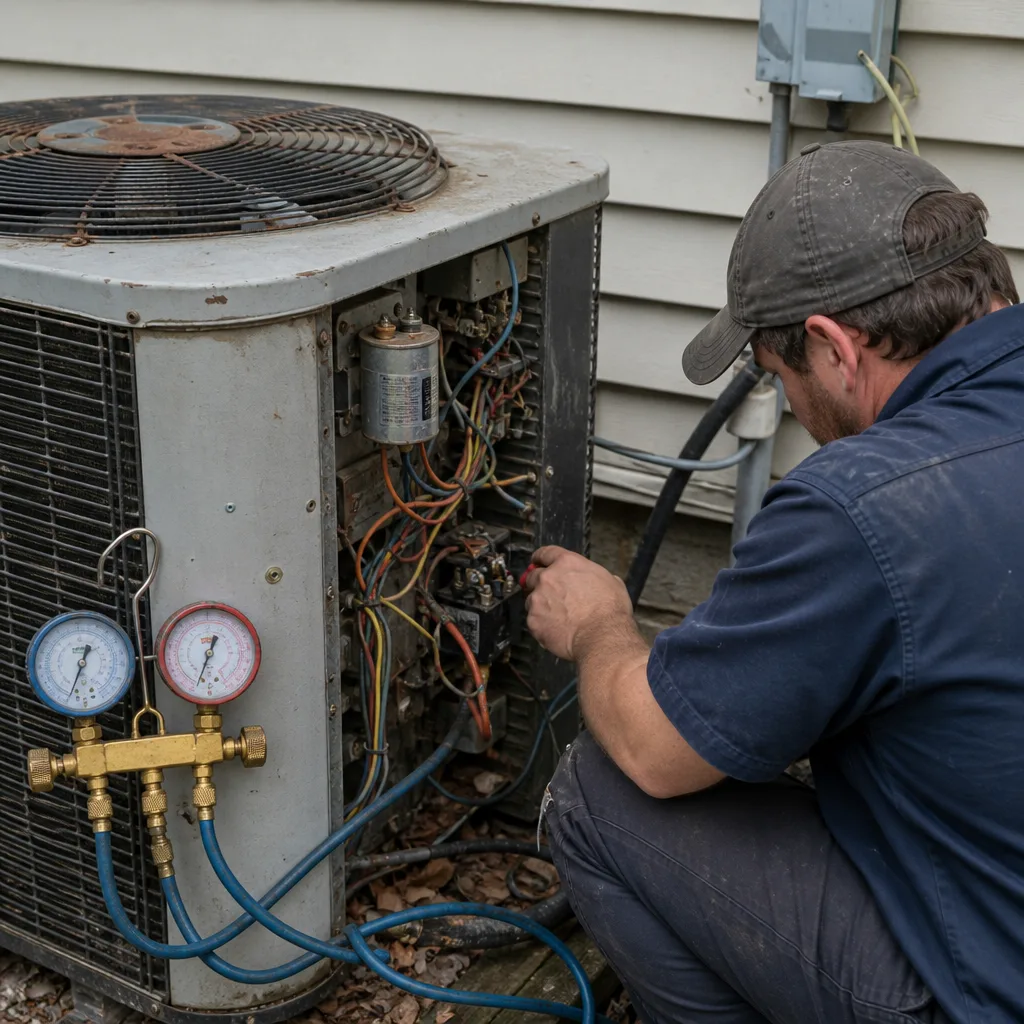
- The capacitor looks swollen, domed, or leaked. This is the most obvious physical sign. When the dielectric material inside breaks down, it can produce gas, which pushes the top of the capacitor outward. A bulged top or oil staining around the terminals means the part is done. We point this out on every capacitor-related service call, and Luis Serrano makes a habit of showing homeowners the failed part and what it looked like versus a healthy one.
- You hear a clicking sound when the system tries to start. That click is often the relay or contactor engaging, followed immediately by the capacitor failing to deliver the start surge. The system may try repeatedly, clicking each time. It’s a sound worth checking sooner than later, because repeated failed starts stress the compressor.
- Your energy bill climbs while cooling drops. A compressor running with a failing capacitor draws more current to do less work. Over the course of a Sandy Springs summer, that inefficiency shows up on the Georgia Power statement. When we replace a failed capacitor, we often see the amp draw return to the unit’s nameplate rating immediately.
See the difference
 Before
 After
 Before
 After
 Before
 After
Replacement Cost & What’s Included
For Carrier capacitor replacement in Sandy Springs, installed pricing typically lands between $150 and $650. The lower end covers a straightforward run capacitor swap, while the upper end accounts for dual-run capacitors, Infinity-series units, or systems that need a start capacitor added as part of the repair. Here’s what shapes the number:
- Single versus dual-run: Dual-run capacitors cost more than single-function units and take a little more time to test correctly
- OEM versus aftermarket: Carrier-branded capacitors carry a premium; quality aftermarket equivalents can save $20 – $50 without sacrificing performance
- Accessibility: Some Sandy Springs condensing units are parked in tight corners, behind fences, or up on brackets, which adds labor time
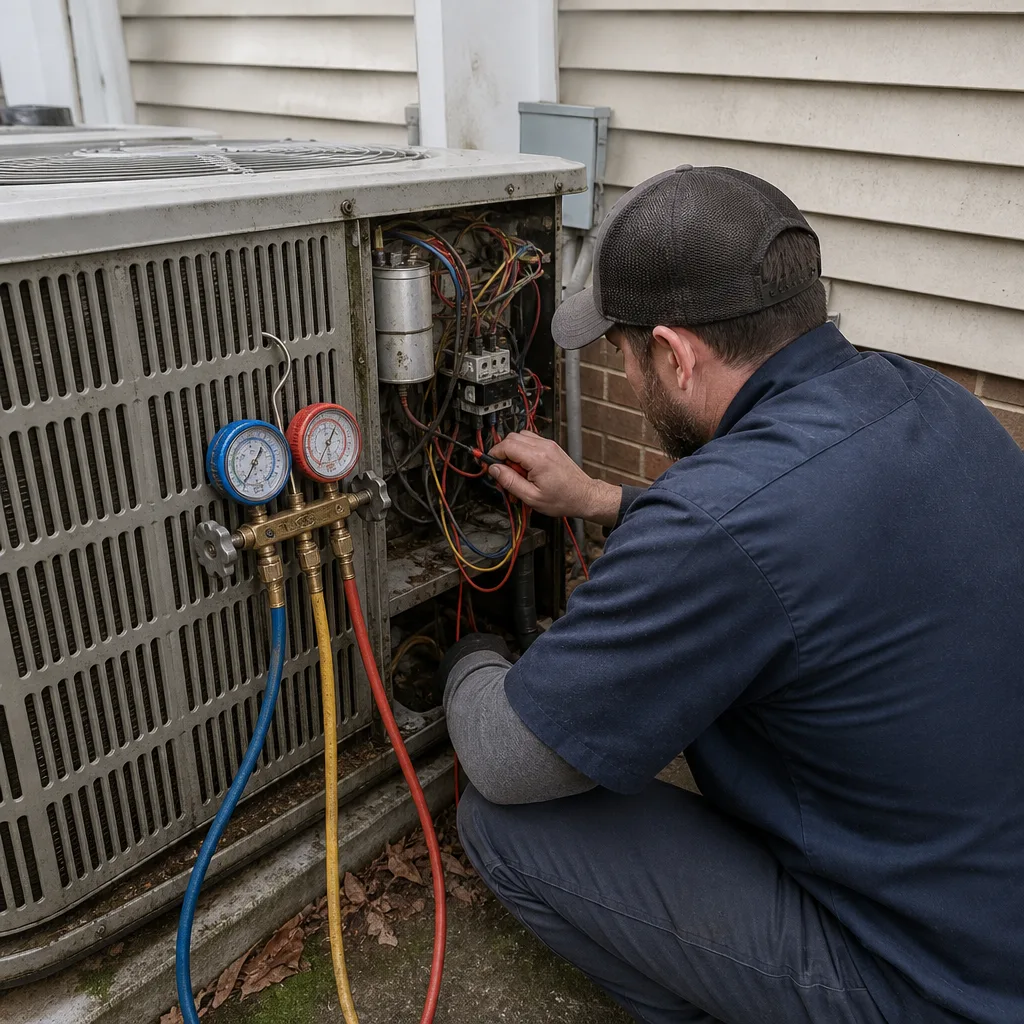
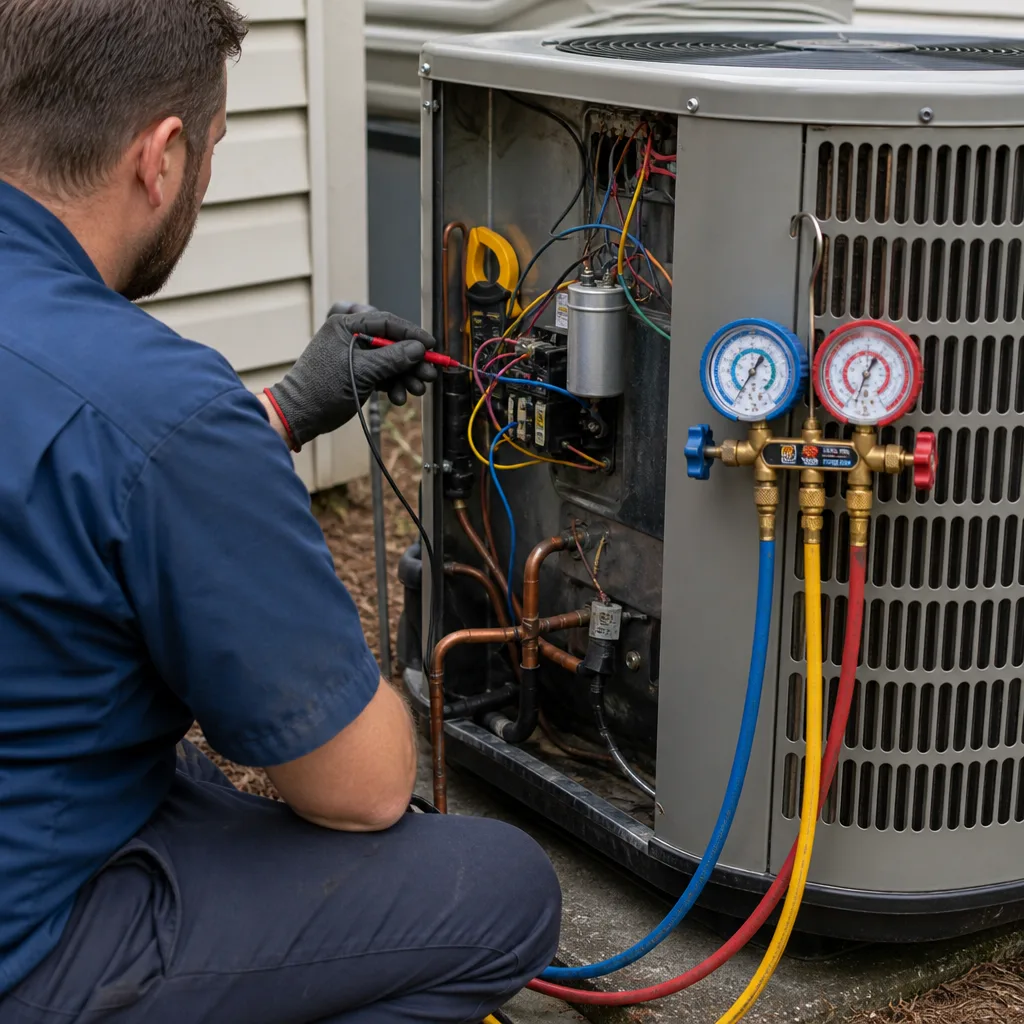
- Diagnostic work: We always verify the capacitor failure with a multimeter before replacing anything, because a motor or relay issue can mimic capacitor symptoms
Every replacement includes a written price before any work starts, the part itself, labor, testing after installation, and the 365-Day Done Right Promise on the work. We never surprise you with a number after the fact. The C.A.R.E. code the crew follows means they explain the price before touching a single screw, ask before moving anything near the unit, and leave the work area cleaner than they found it, shoe covers and drop cloths included when the job takes us inside.
DIY or Call Us?
Here’s the honest split, and we’ll say it plainly: capacitors store electricity even when the power is off. They’re the reason every HVAC technician carries a discharge tool. A capacitor that still holds a charge can deliver a serious shock long after you’ve cut power to the unit, and the wrong replacement can damage your Carrier compressor in ways that turn a $200 repair into a $4,000 one. For that reason, we don’t recommend a DIY capacitor swap, even for comfortable homeowners.
What you can safely do is help us diagnose faster. If the outdoor unit is humming or clicking, cut power at the breaker, then look at the capacitor through the access panel. Tell us if it looks swollen, domed, or oil-stained. Check your thermostat batteries and air filter while you’re at it, because those are the free fixes. Then call (229) 490-2049, tell us what you saw, and we’ll bring the right capacitor on the first truck roll. That call is answered by a live person, any hour, every day. As Luis puts it: “Tell me what the house is doing, and we’ll figure out the rest from there.”
FAQs
In Sandy Springs, expect 5 to 10 years from a Carrier capacitor, with the hotter summers and frequent cycling pushing most units toward the lower end. Georgia humidity accelerates internal corrosion, and units that run hard from May through September age capacitors faster than the same equipment in milder climates. Call (229) 490-2049 and we can test your capacitor’s remaining life during a tune-up.
No. Capacitors are sealed components, and once the dielectric material inside has degraded, there’s no way to restore them. Replacement is the only correct fix, and it’s one of the most affordable repairs in residential HVAC. Call (229) 490-2049 for an exact quote on your unit, with a written price before any work begins.
Most Carrier capacitor replacements take 45 to 90 minutes from start to finish, including testing, removal, installation, and verifying the compressor and fan are drawing the correct amps. If the system needs additional diagnostics because the capacitor failure was a symptom of a deeper issue, we’ll walk you through what we found before doing anything else. Call (229) 490-2049 and we’ll schedule a visit that works around your family’s routine.
Yes, we keep the most common Carrier capacitor ratings on our trucks, including dual-run units from 25/5 through 70/10 microfarads, in both oval and round configurations. If your unit requires a less common spec, we can usually have it in Sandy Springs by the next morning. Call (229) 490-2049, describe your unit, and we’ll tell you if we have the part on hand before we dispatch.
If your Carrier system is humming, clicking, or struggling through a Sandy Springs afternoon, call (229) 490-2049 for a free estimate and a straight answer. Meadowsweet Heating and Air Sandy Springs is an independent provider, not affiliated with Carrier, but our technicians know these units inside and out, and we’ll treat your home the way we’d want ours treated, floors covered, pets safe, and the work backed by a 365-day guarantee.
Written by Luis Serrano, Owner, Meadowsweet Heating and Air Sandy Springs at Meadowsweet Heating and Air Sandy Springs, serving Sandy Springs and nearby areas.